

It’s easy to focus only on blooms and ground-level plants when planning your landscape, but adding small trees can take your space to the next level. The right tree brings structure, height, and year-round interest, helping your space feel more layered and complete.
Not every tree is a good fit, though. Large trees can outgrow the space, cast too much shade, or compete with surrounding plants.
That’s why choosing small trees with non-invasive roots is a smarter, more balanced option that offers beauty and presence without overwhelming the space.
Whether you’re after seasonal color, sculptural form, or a bit of light shade, there are small trees for landscaping that thrive in flower beds and even pair well with perennial plants, shrubs, and groundcovers.
The following are small trees with compact size, visual appeal, and ability to enhance the planting space without taking over entire outdoor space:
1. Japanese Camellia
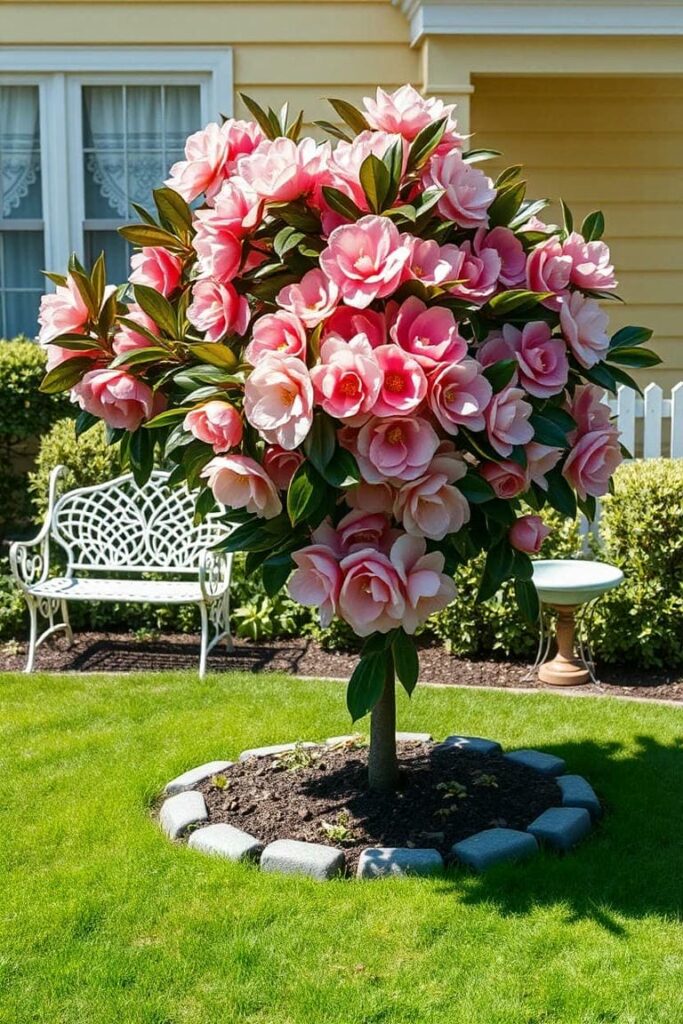
Japanese Camellia features rose-like blooms that flourish from winter through early spring. It provides a vivid burst of beauty when most plants remain dormant, making it a standout in quieter months.
Growing between 6 to 12 feet tall with a balanced spread, Japanese Camellia keeps your space vibrant year-round. Its structured form and glossy foliage lend lasting appeal, while its long blooming season ensures your space remains eye-catching even in the off-season.
2. Hydrangea Paniculata
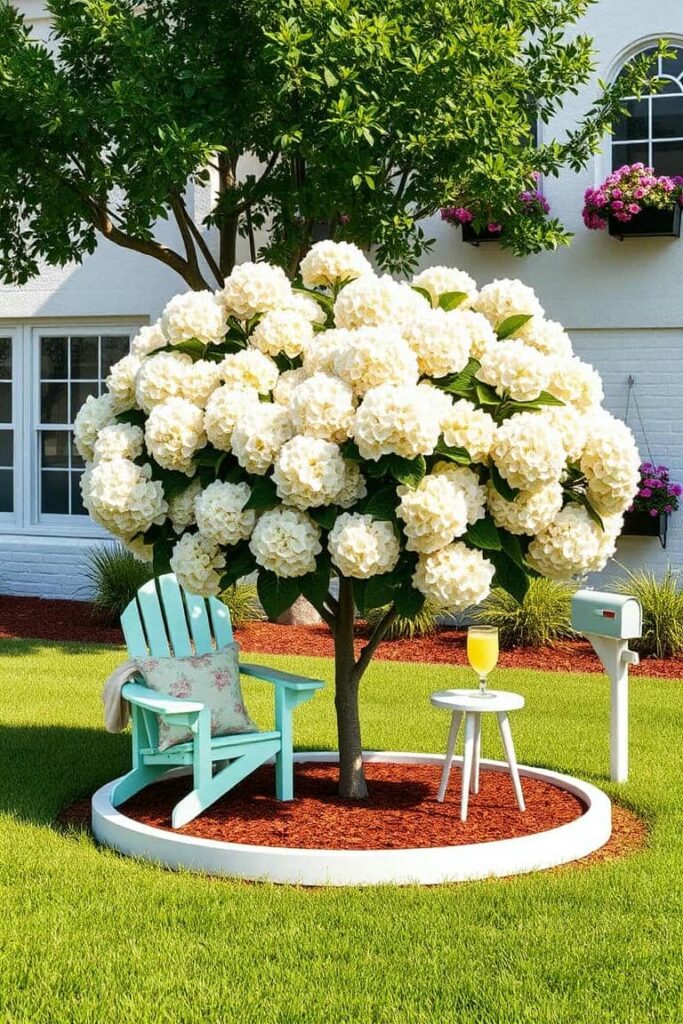
Hydrangea Paniculata brings height, structure, and evolving color to flower beds, walking area, and borders, making it a standout option for compact spaces. Its creamy white blooms shift to soft pink for continuous visual interest from midsummer into fall.
Hydrangea Paniculata adds vertical appeal without overshadowing neighboring plants and it pairs effortlessly with hostas, impatiens, and low-profile shrubs.
3. Crape Myrtle
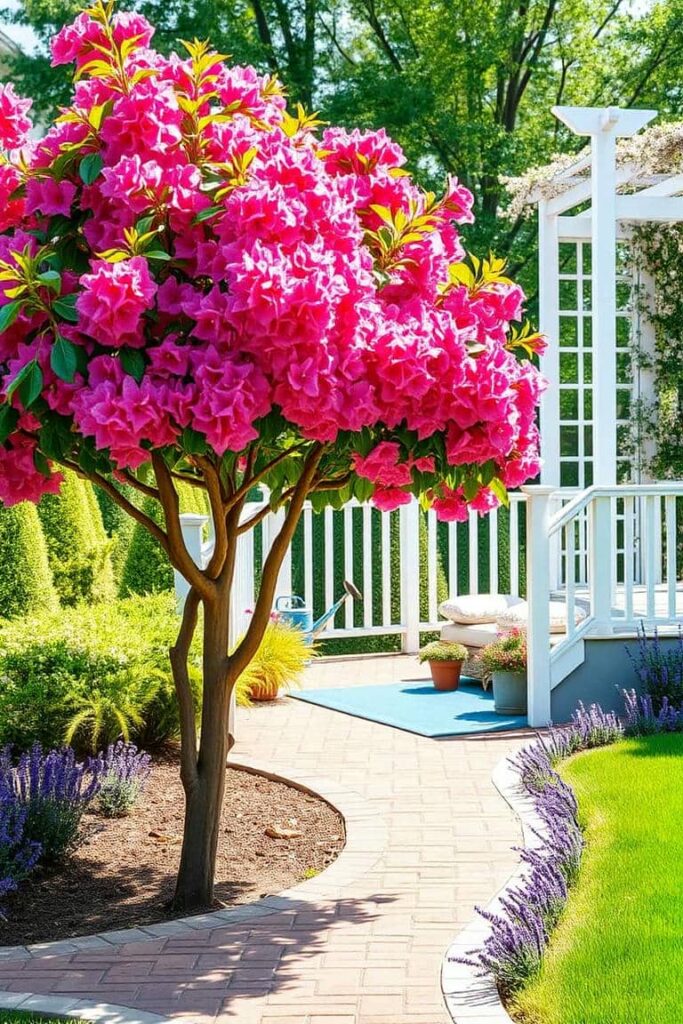
Tall Crape Myrtle varieties such ‘Acoma,’ ‘Tonto,’ and ‘Chickasaw’ bring vibrant color and compact charm to front yard flower beds.
These small trees for landscaping bloom profusely in summer, filling the garden with vivid red, pink, white, or purple blossoms that last for weeks while drawing in butterflies and hummingbirds.
Crape Myrtles suit warm climates perfectly because it thrives in full sun and heat. They remain visually appealing even in dormancy thanks to their smooth, peeling bark and graceful branch structure.
4. Saucer Magnolia
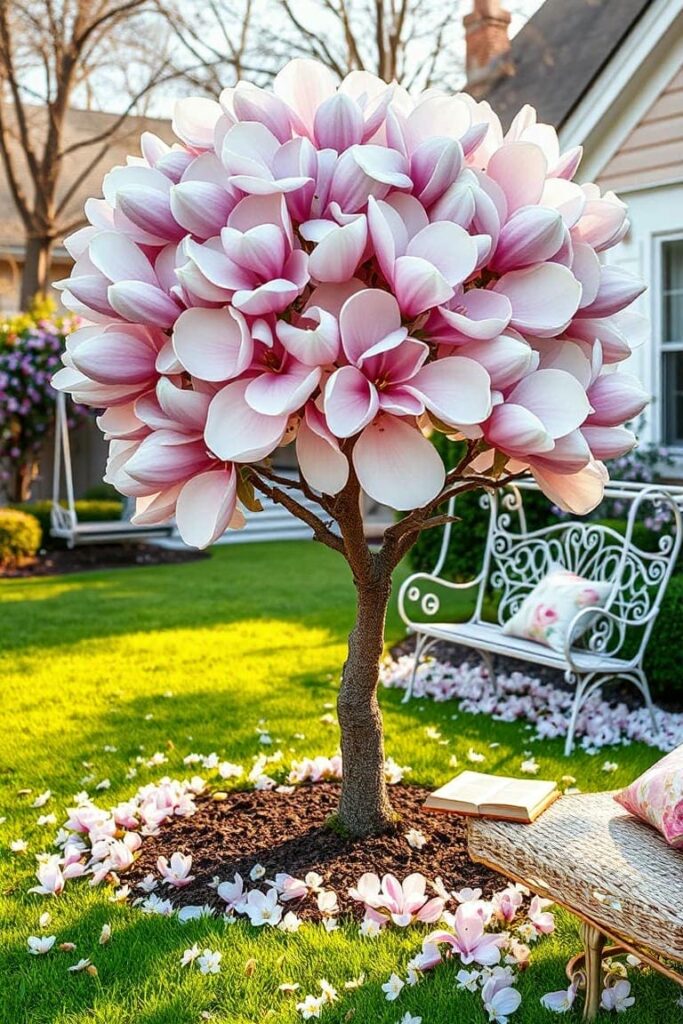
Saucer Magnolia features beautiful cup-shaped, fragrant flowers that reach up to 12 inches wide.
Blooming on bare branches in shades of pink, white, or purple, Saucer Magnolia creates a striking display before most plants even begin to stir. Its rounded crown and smooth bark keep spaces visually appealing even in winter.
Saucer Magnolia thrives in full sun but adaptable to partial shade. It benefits from post-bloom pruning to maintain its form and remove damaged limbs, ensuring continued health and elegance.
5. Eastern Redbud
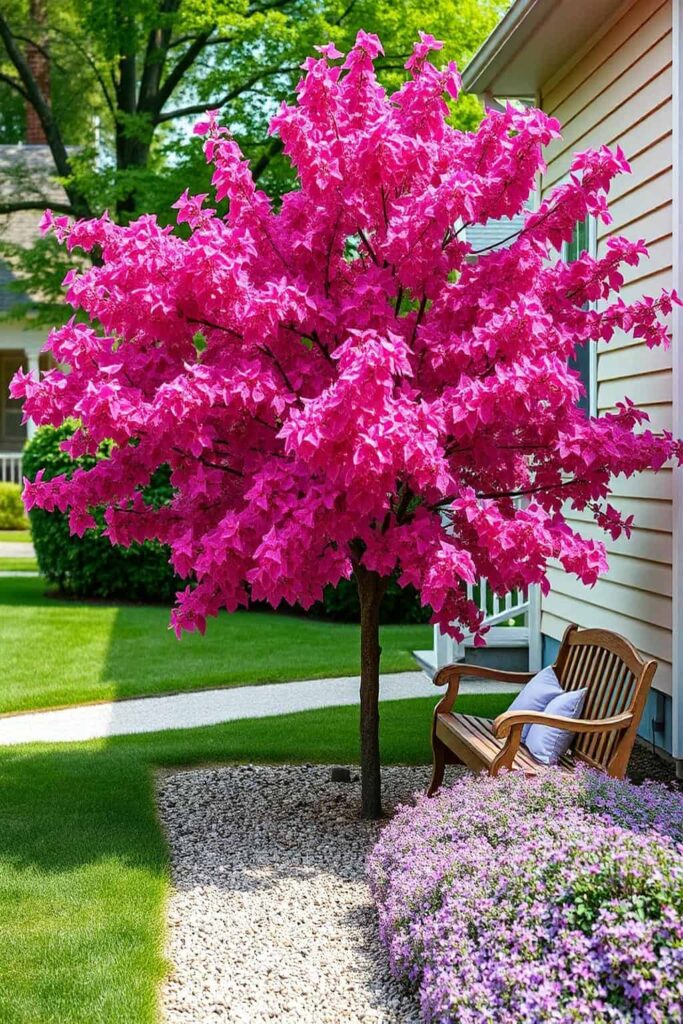
Small Eastern Redbud varieties such as Ace of Hearts, Forest Pansy, Rising Sun, and Ruby Falls bring charm and seasonal drama with ease.
While Small Eastern Redbud varieties manage full sun, partial shade remains ideal for steady growth and vibrant blooms. Their striking early-spring display of pink blossoms on bare branches creates an unforgettable visual moment.
6. Japanese Maple
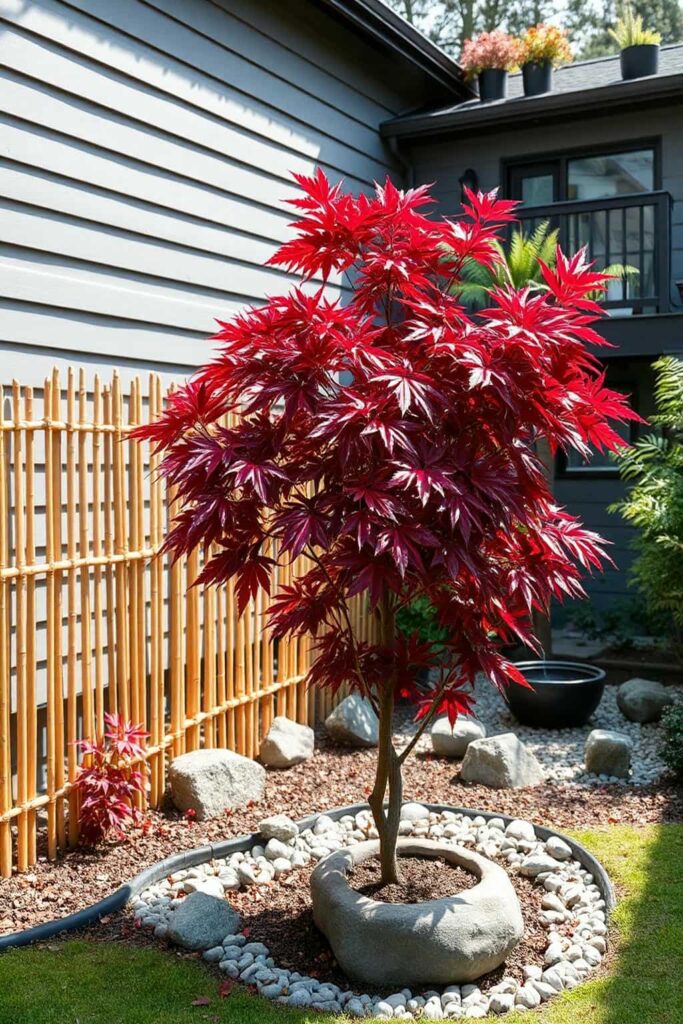
Japanese Maple makes an eye-catching centerpiece that elevates the visual effect of surrounding flower beds. Its finely textured leaves dazzle in vibrant shades of red, purple, and green, adding depth and contrast to your garden’s color palette.
Although some varieties tolerate full sun, most thrive in partial shade. For example, Crimson Queen, Tamukeyama, Bloodgood, and Orangeola bring both beauty and gentle, dappled shade perfect for enhancing and protecting the plants beneath them.
7. Hibiscus Syriacus
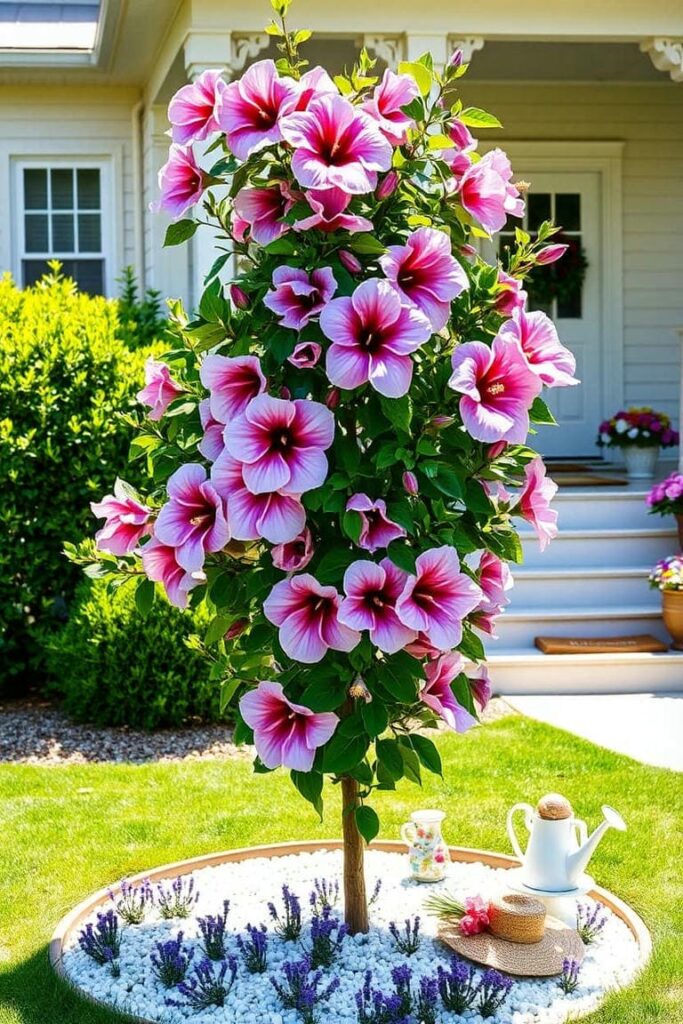
Hibiscus Syriacus adds bold color and tropical flair with its large, funnel-shaped blooms in shades of purple, white, red, lilac, or pink. Easily trained into a compact tree form, it becomes a vibrant late-season focal point when most other flowers have faded.
Reaching up to 8 feet tall, or less with dwarf varieties, Hibiscus Syriacus suits small garden spaces without looking forced. Its extended blooming period and decorative shape make it a striking, space-conscious option for boosting visual interest through summer and into fall.
8. Fringe Tree
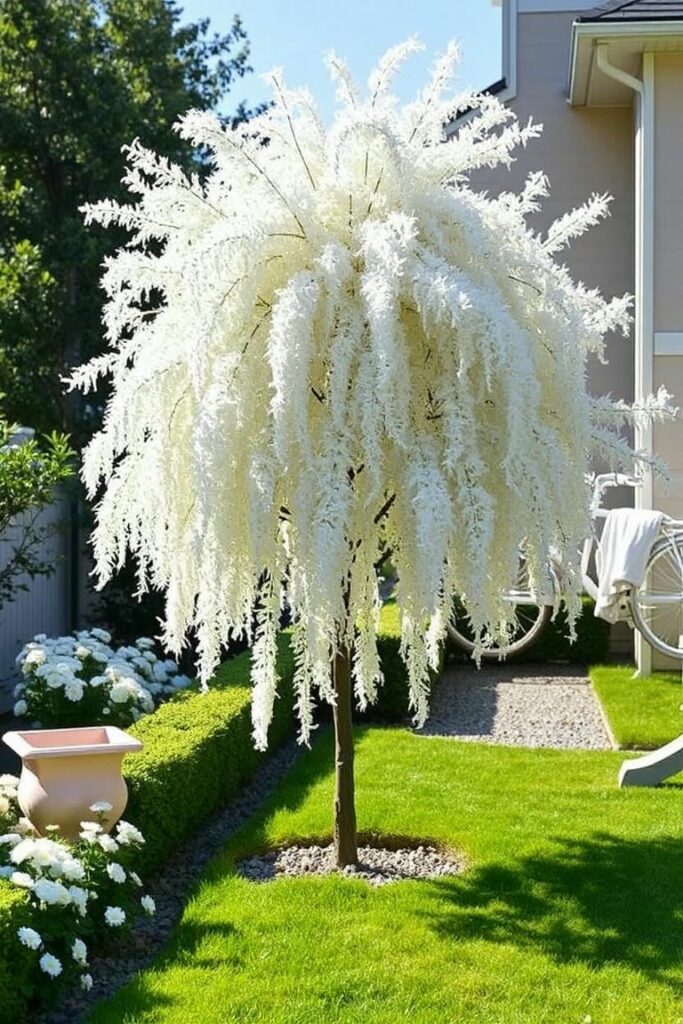
This North American native features airy white blooms that resemble floating clouds. Its open canopy and manageable size make it a graceful addition to small garden spaces. You can grow it as a large shrub or train it into a compact tree.
With its sweet fragrance and soft texture, Fringe Tree adds elegance and seasonal charm without overwhelming nearby plantings. For more striking floral displays, go for male trees, which typically bear fuller, more dramatic blooms.
9. Kousa Dogwood
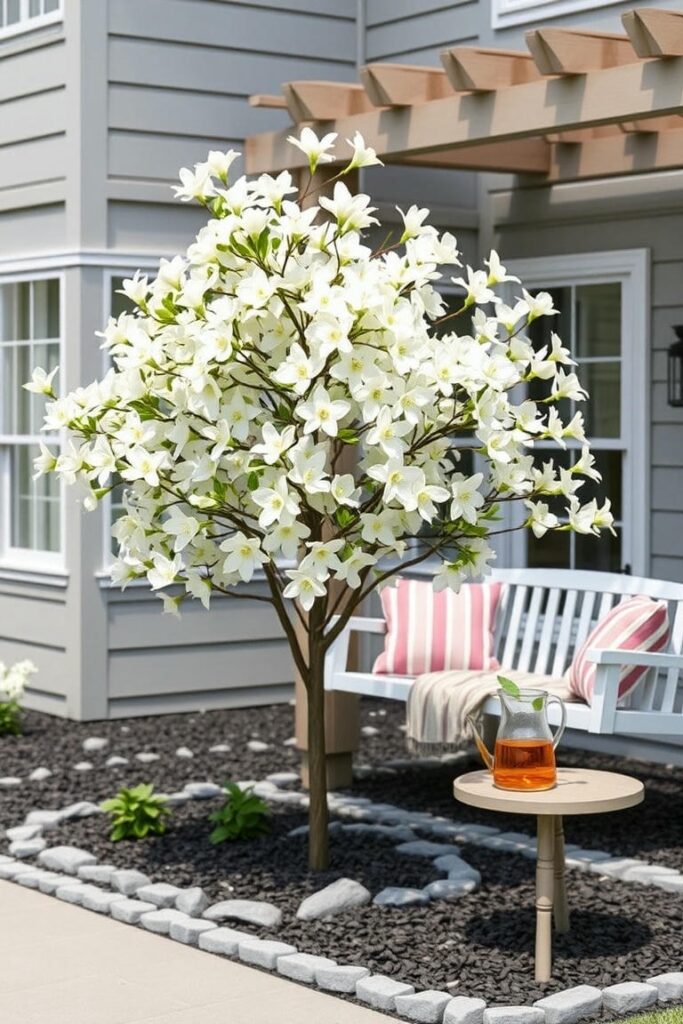
Kousa Dogwood bursts into bloom with showy white flowers in spring and early summer, followed by lush green foliage that later transforms into fiery shades of scarlet, orange, or burgundy in fall.
Kousa Dogwood brings year-round charm with minimal fuss, serving as both a dependable and decorative focal point while remaining more disease-resistant and drought-tolerant.
10. Dwarf Korean Lilac
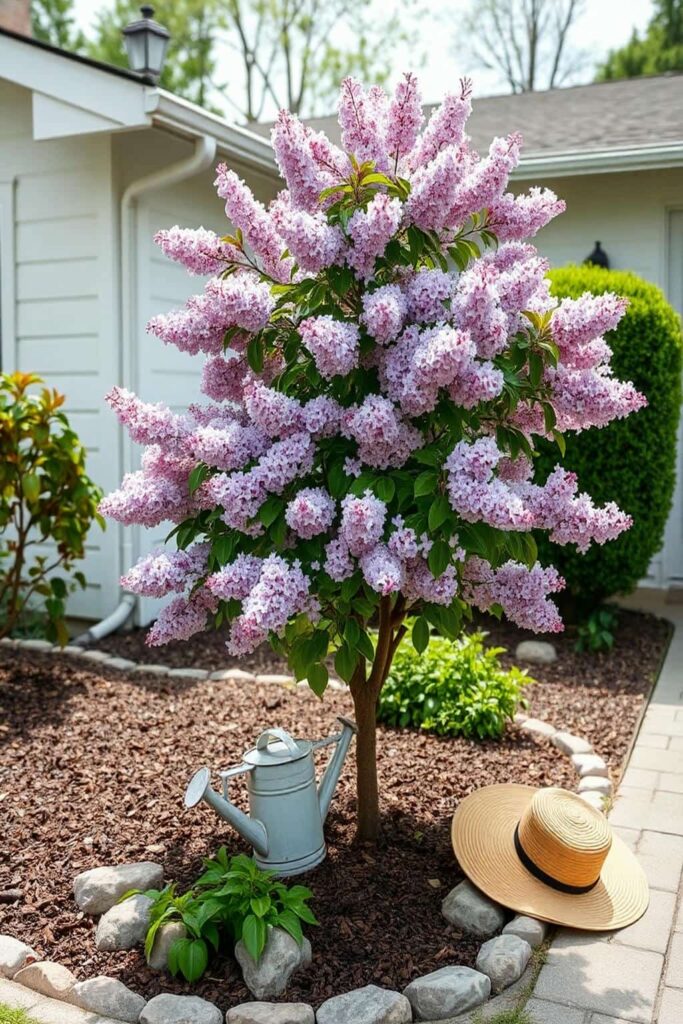
Growing just 4–6 feet tall with a 5–7 foot spread, Dwarf Korean Lilac’s abundant lavender-pink blooms stand out against lush green foliage, filling the landscape with fragrance and color during late spring.
With a compact, rounded form and strong cold tolerance, this tree suits cooler climates and resists damage from deer and rabbits.
Its tidy shape and vibrant blossoms make it a low-maintenance yet striking option for gardeners seeking beauty in a small space.
11. Purple Leaf Sand Cherry
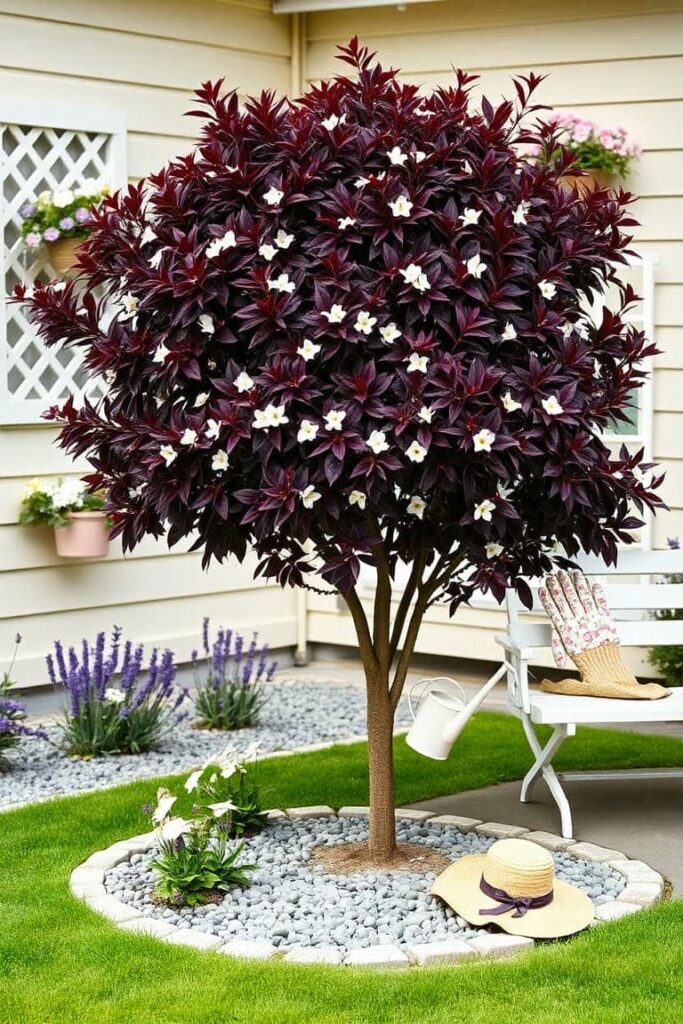
Purple Leaf Sand Cherry brings striking contrast to outdoor spaces with its rich purple to crimson foliage and delicate, fragrant pale pink or white blooms in spring. Its vivid leaves maintain their color through the growing season.
Purple Leaf Sand Cherry is naturally a shrub, but you can shape it into small trees for landscaping with either a single or multiple trunks. It doesn’t spread aggressively or develop invasive roots, so it’s an ideal choice for controlled, eye-catching structure in tight spaces.
12. Smoke Tree
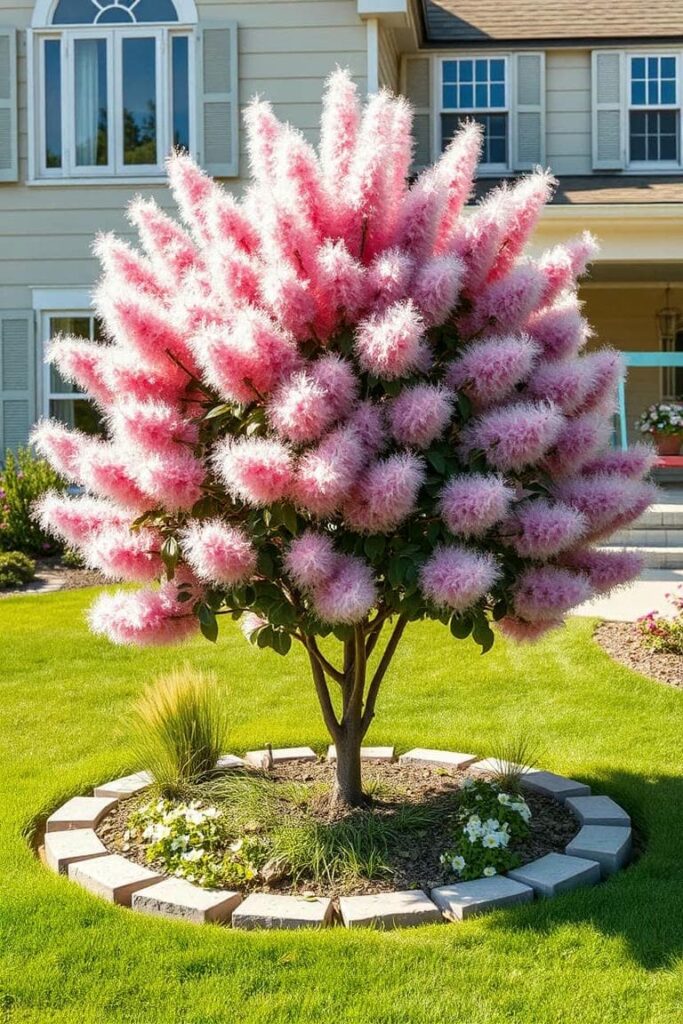
Smoke Tree makes a bold statement with its wispy, smoke-like flower clusters that appear in early summer. Its vibrant foliage, ranging from burgundy and chartreuse to deep green, adds drama and texture throughout the season.
This adaptable tree thrives in full sun and prefers well-drained soil but also performs well in rocky or poor conditions. Its ability to handle drought with ease once fully established makes it an ideal choice for xeriscaping.
13. Star Magnolia

Star Magnolia features delicate, star-shaped white or pale pink blooms that appear in late winter or early spring. Its green leaves shift to brilliant shades of orange, red, or yellow in the fall for a year-round interest.
Star Magnolia is low-maintenance and adaptable. It thrives in rich soil with moderate watering and flourishes in partial to full shade.
14. Serviceberry
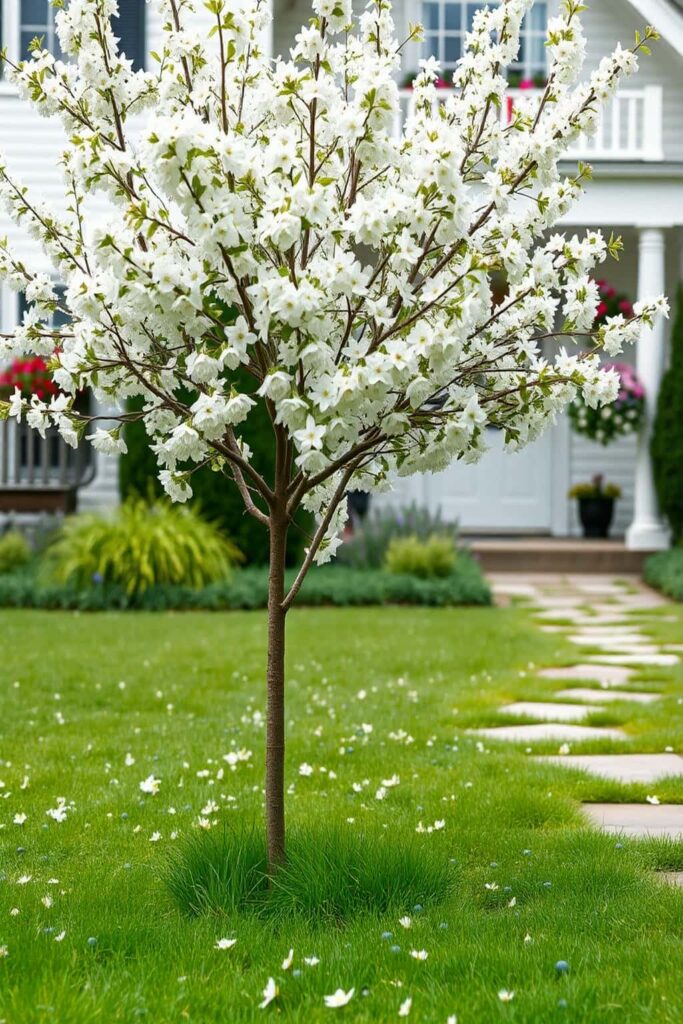
Serviceberry adds four-season appeal to flower beds with delicate white blooms in spring, followed by edible purple-blue berries in summer. Its oval green leaves create a lush backdrop before turning vivid shades of red, yellow, or purple in fall.
Serviceberry’s smooth gray bark keeps the tree visually interesting in winter, while its summer berries attract birds such as robins, cardinals, and cedar waxwings.
15. Flowering Crabapple
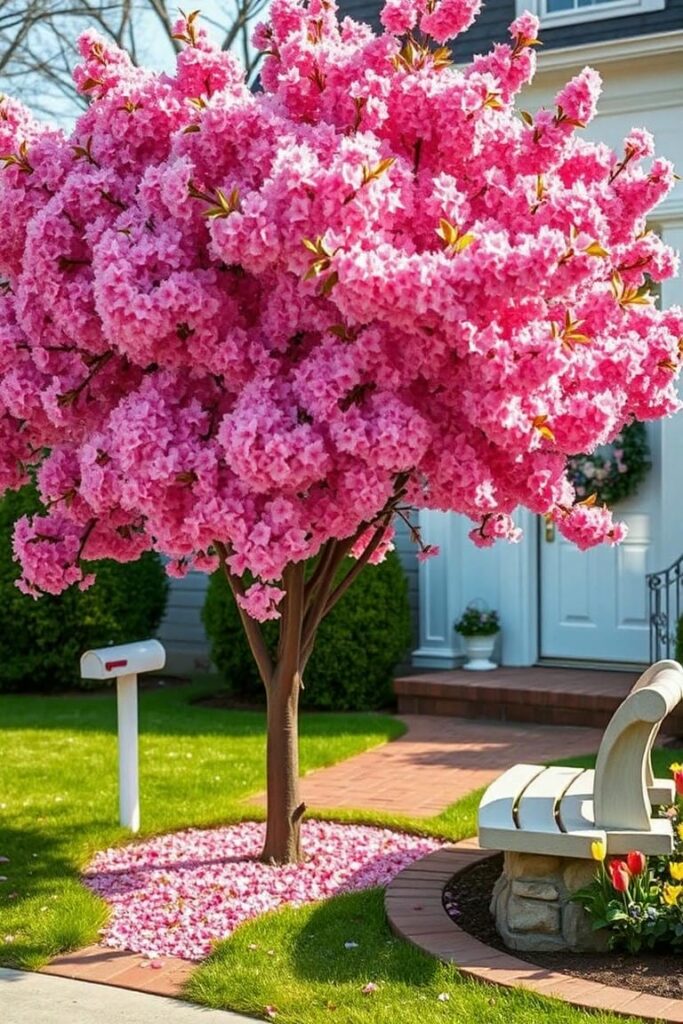
The flowering crabapple offers a burst of spring color and fragrance, with blooms in white, pink, or red emerging before its foliage unfolds. This tall and narrow tree adds charm and sensory appeal to front and backyard, making it an ideal springtime highlight.
Its beauty extends beyond spring, showcasing glossy green, bronze, or purple leaves in summer and vibrant fruits in fall that linger into winter.
With its multi-season interest, flowering crabapple brings dynamic color and texture to garden spaces year-round.