

Tall, narrow trees for privacy bring a unique kind of beauty to a landscape. Their upright form draws the eye upward, adding height and structure without overwhelming the space.
Whether you’re working with a tight yard or simply want to create a more defined, elegant look, these trees offer a stylish solution for formal designs, modern landscapes, and casual gardens that need a touch of vertical contrast.
Their slim profiles make them incredibly versatile. You can plant them to soften hard lines along fences, use them to frame entryways or pathways, or place them in tight corners where broader trees wouldn’t fit.
Beyond looks, these trees also serve practical purposes. Their dense foliage can act as a living screen, offering privacy from neighbors or hiding less-than-ideal views. And because they grow upward instead of out, they bring shade and definition without stealing too much ground space.
Here are 15 tall and narrow trees for privacy that combine style with function to give your landscape a bold yet balanced presence:
1. Sky Tower Ginkgo
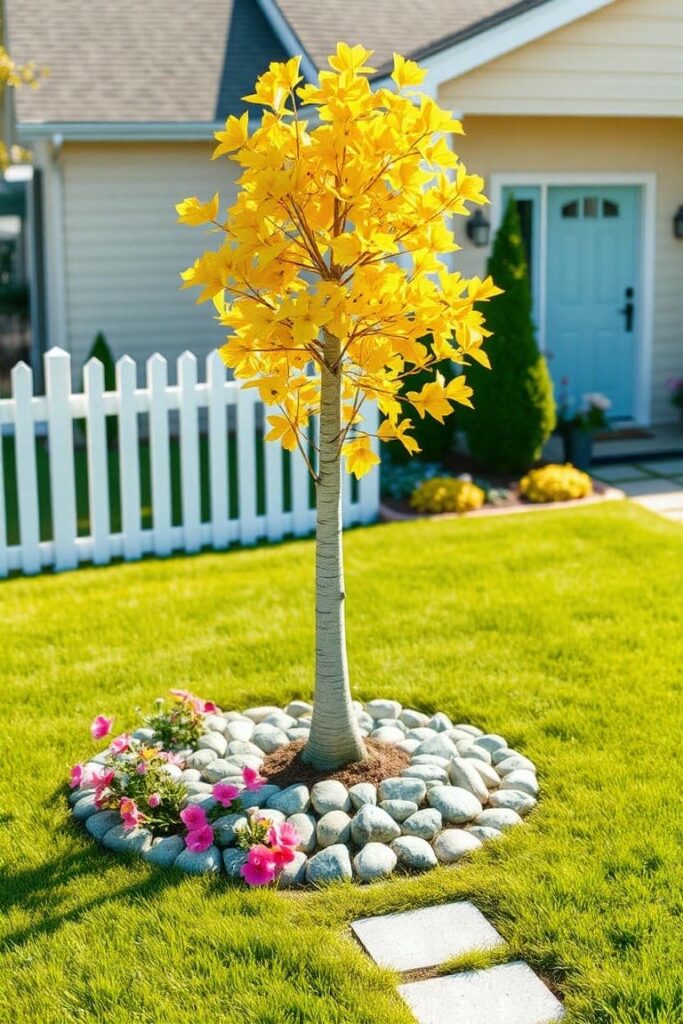
Sky Tower Ginkgo brings bold fall color with its golden-yellow foliage and stands out with a narrow, upright form, growing up to 20 feet tall and 6 to 8 feet wide.
Its slow growth makes it best suited for those seeking a low-maintenance, long-term addition rather than quick results.
Sky Tower Ginkgo adapts to most well drained soils, it tolerates urban conditions, and it performs best in full sun, though it can handle partial shade.
2. Italian Cypress
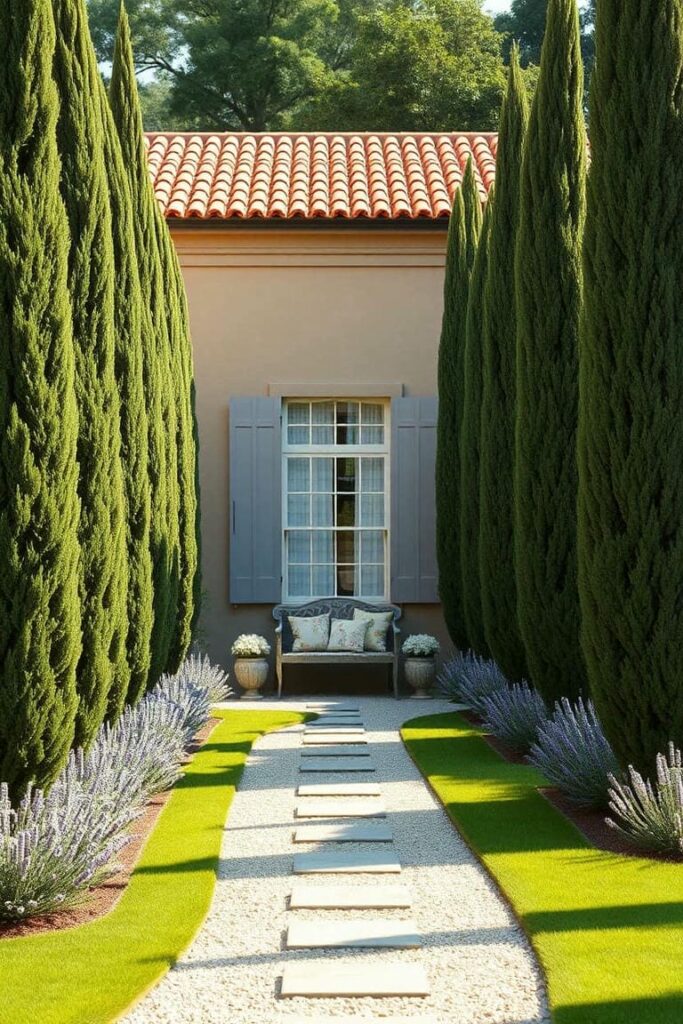
With its towering, slender form, the Italian Cypress gives Mediterranean-style gardens stunning vertical interest.
Staying small at only 3 to 5 feet wide, this fast growing tree reaches up to 70 feet in height, and it’s therefore perfect for small spaces.
Moreover, the Italian cypress makes a good living fence if planted in close rows along property boundaries.
3. Kindred Spirit Oak Tree
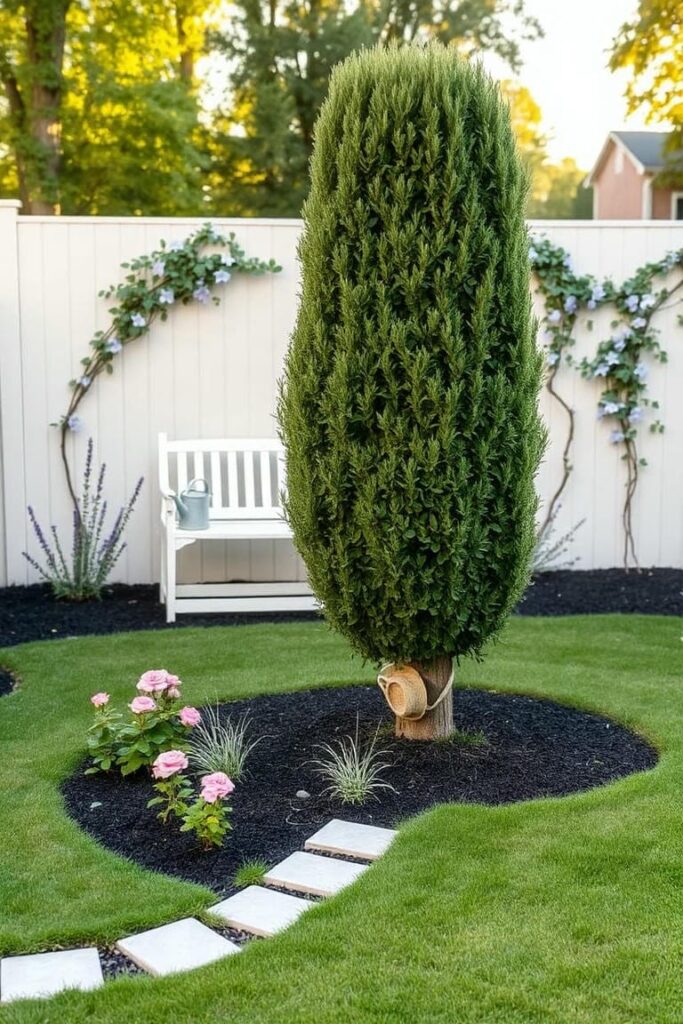
Rising 30 to 40 feet with a small spread of 6 to 8 feet, Kindred Spirit Oak is perfect for small areas where conventional oaks would not fit.
It combines the finest of both parent trees – tolerant of drought like English Oak and capable of thriving in wet or poorly drained soils like Swamp White Oak.
You can plant it to give metropolitan or space-restricted surroundings the traditional oak look without sacrificing toughness or appeal.
4. DannaSpire Columnar Elm
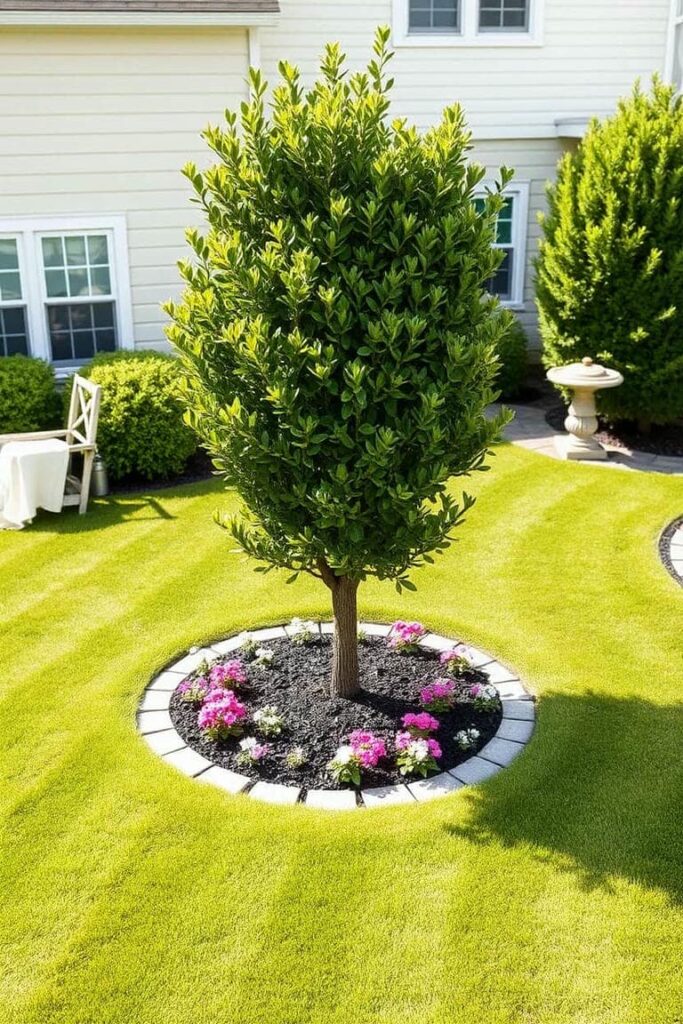
DannaSpire Columnar Elm grows 20 to 25 feet tall with a narrow 3 to 5-foot spread and offers a strong mix of beauty and toughness.
This tree resists Dutch elm disease and adapts well to dry sites, compacted soil, and urban conditions.
Its glossy green leaves form a dense canopy that shifts to golden brown in fall, while its smooth gray-brown bark adds subtle texture as it matures.
5. Japanese Flagpole Cherry
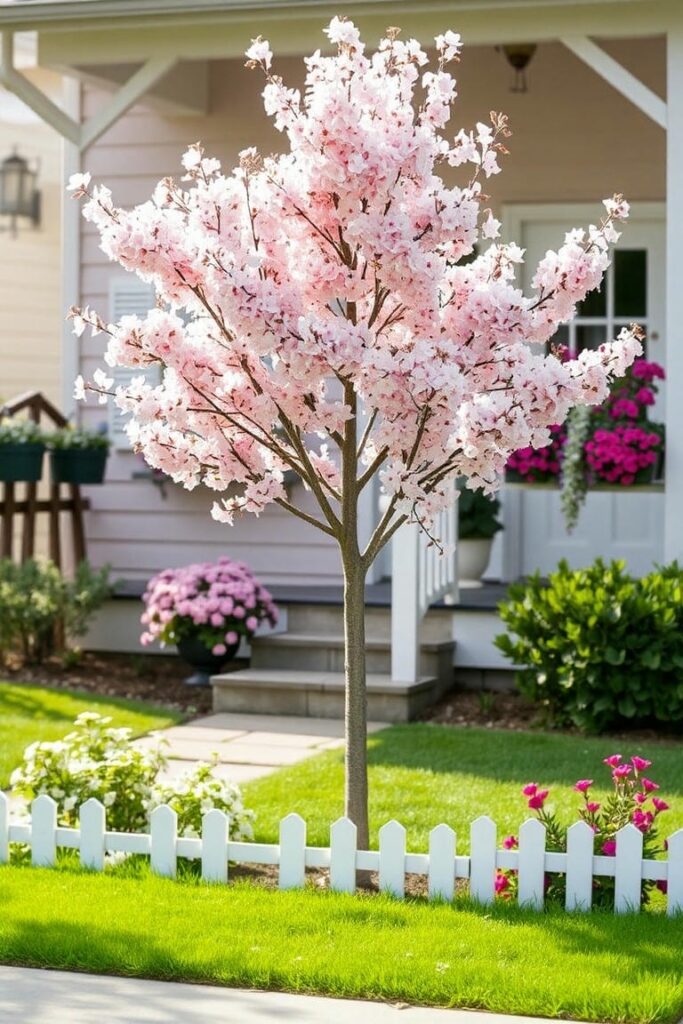
Japanese flagpole cherry offers a stunning spring display with branches covered in delicate pink, semi-double blooms that from a distance create a cloud-like impression.
Its bronze-green leaves deepen to dark green in summer as the seasons change, and then explode into orange and red in fall.
Japanese flagpole cherry measures 20 to 25 feet tall and 4 to 8 feet broad once established, so it’s a great fit for small spaces that require year-round vertical beauty and color changes.
6. Beacon Swamp White Oak
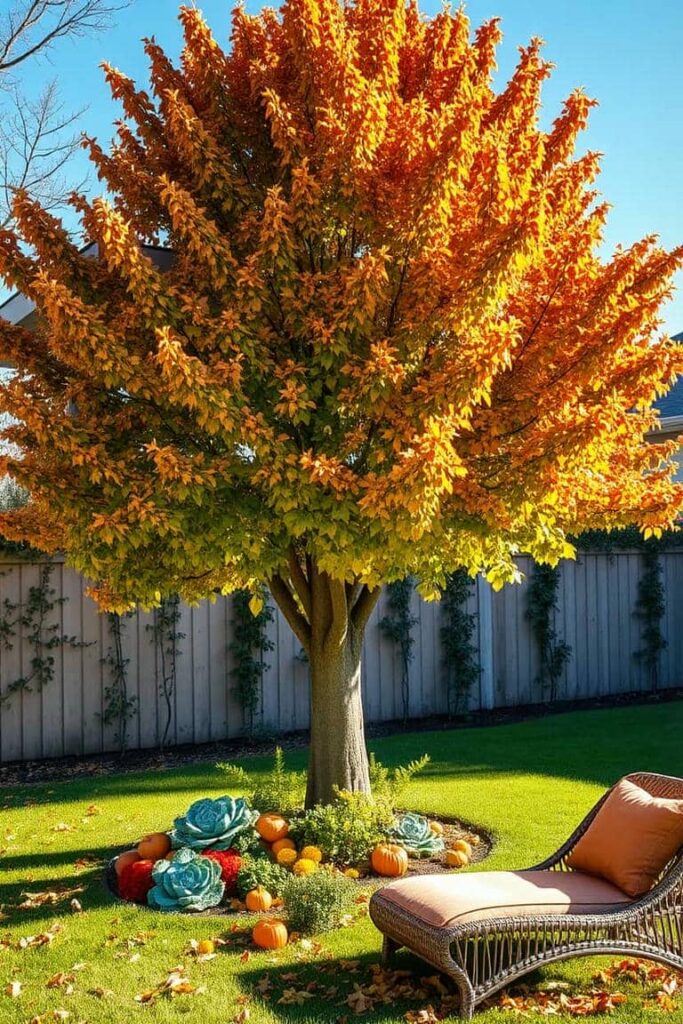
Beacon swamp white oak fits perfectly in soggy or flood-prone areas, thriving in heavy clay and poorly draining soils. Despite its love for moisture, it also adapts to dry conditions and endures hot summers with ease.
Reaching tall while staying narrow, it grows best with at least 6 hours of sunlight but still manages in partial shade.
Beacon swamp white oak’s ability to tolerate pollution makes it a strong candidate for urban landscapes where resilience and structure are essential.
7. Lombardy Poplar
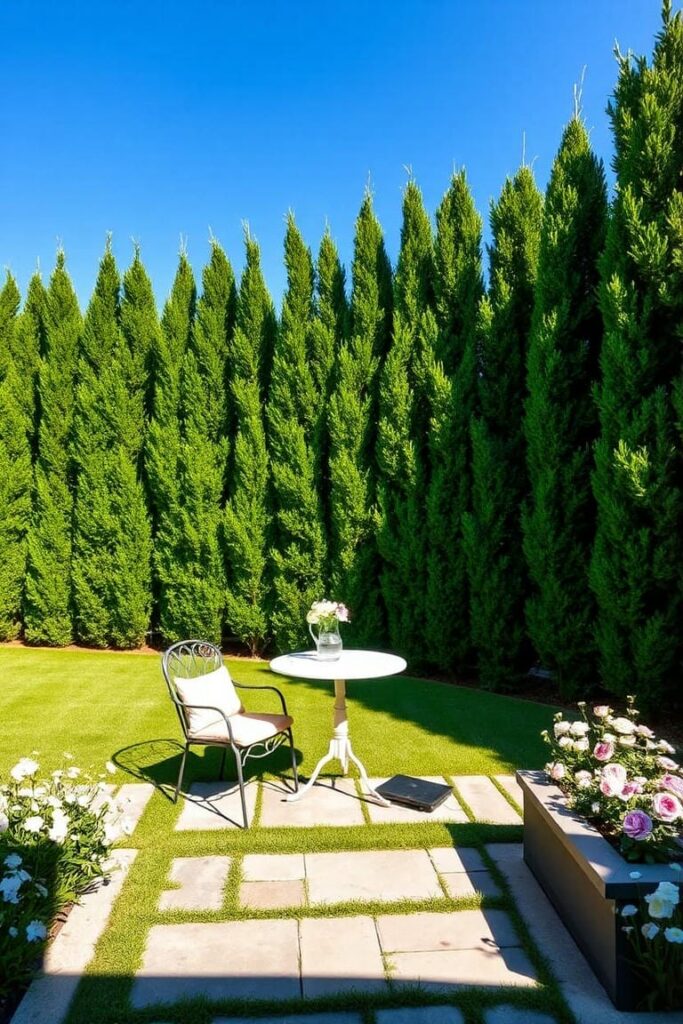
While keeping a small spread of 10 to 15 feet, Lombardy poplar grows 6 feet annually and may reach a full height of between 40 and 70 feet.
This fast-growing tree is a go-to choice for rapid coverage since it provides a dependable screen against unwelcome vistas, noise, and wind.
You can plant it along property boundaries to create a striking, leafy barrier with thick limbs and heart-shaped, brilliant green leaves that turns golden-yellow in autumn.
8. Leyland Cypress
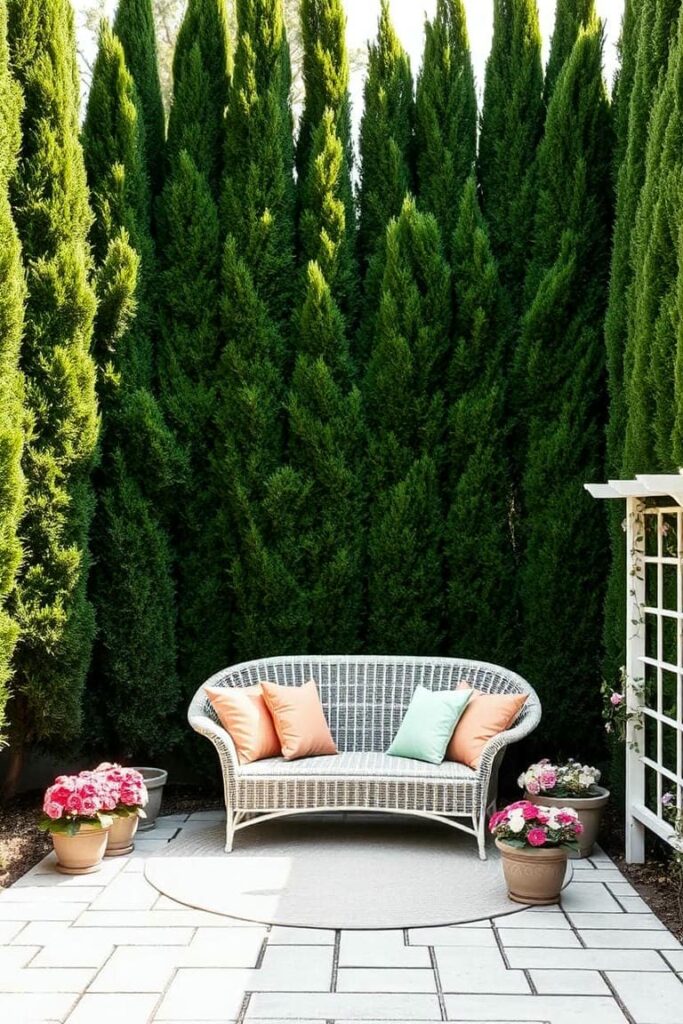
Leyland cypress grows fast, adding 3 to 4 feet a year, and reaching 60 to 70 feet tall with a spread of up to 25 feet.
With its thick, fan-like evergreen leaves, Leyland cypress makes a strong, bold statement landscape design, particularly if employed as a privacy screen or tall fence.
Leyland cypress tolerates partial shade, bad soils, hot climates, and drought and changes to fit a broad spectrum of situations.
Regular pruning without cutting into old wood helps to create a neat, consistent form by inhibiting fresh development.
9. Swedish Aspen
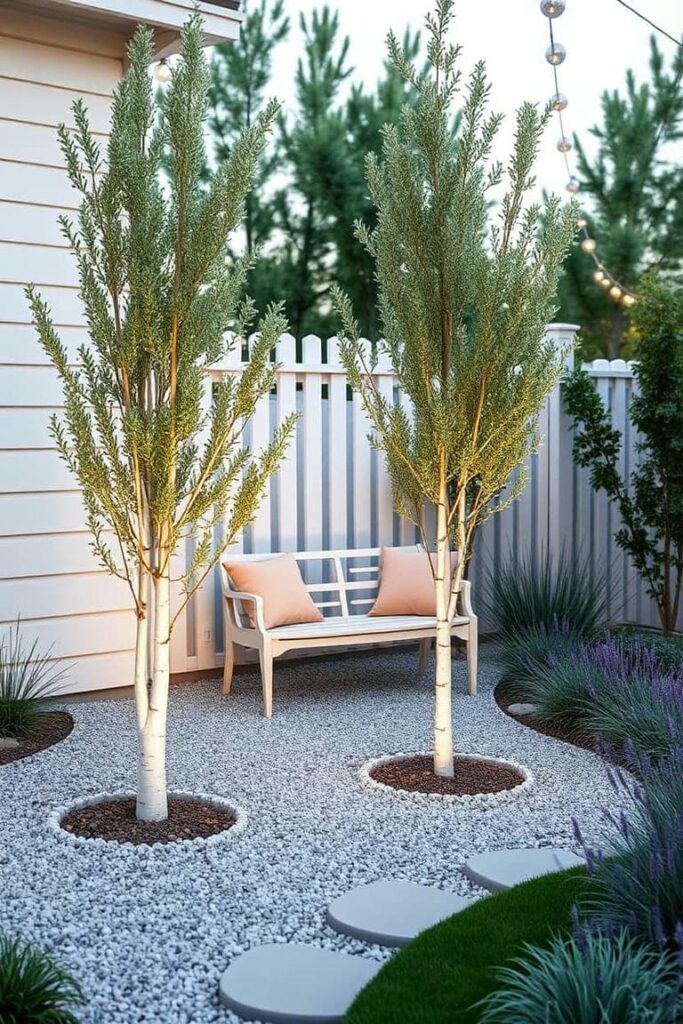
Swedish Aspen rises 40 to 50 feet tall with a narrow 6 to 8-foot width, offering a sleek, upright profile ideal for windbreaks, privacy screens, and vertical interest.
This tree’s bright green, heart-shaped leaves shimmer in the breeze and shift to gold-yellow in fall, bringing seasonal color and motion to any landscape.
Swedish Aspen handles cold climates with ease and thrives in both urban and rural settings. Its early spring flowers remain subtle, allowing its graceful form and foliage to take center stage year-round.
10. Skyrocket Juniper
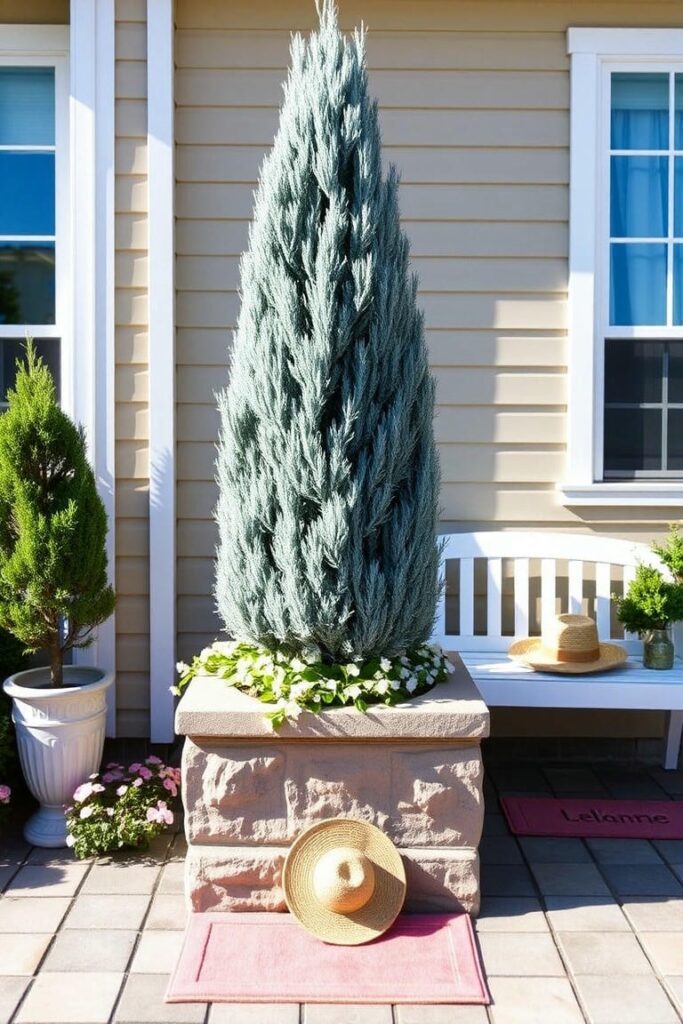
Skyrocket juniper is a non-invasive tree that reaches up to 30 feet tall and stays slim at 2 to 3 feet wide, forming a sleek privacy screen with blue-green, scale-like foliage.
It holds its shape naturally and requires minimal pruning aside from clearing dead or crowded branches in early spring or late winter.
Once mature, skyrocket juniper handles drought with ease, making it ideal for xeriscaping or rock gardens where water conservation remains a priority.
You can pair skyrocket juniper with plants of varying foliage colors to create visual balance and texture.
11. Blue Weeping Alaskan Cedar
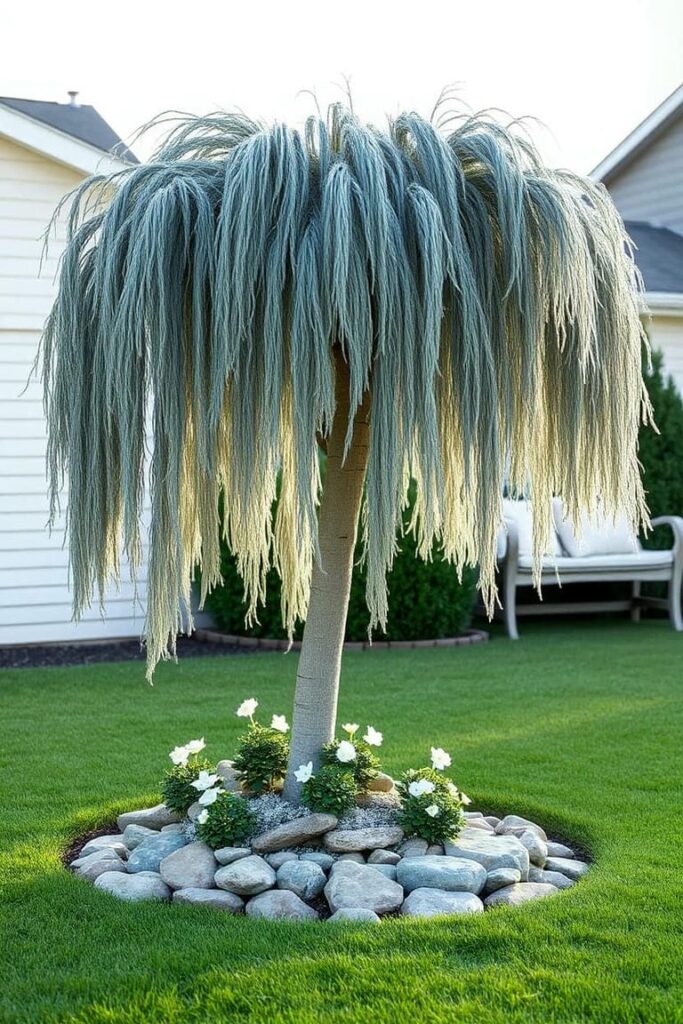
Blue Weeping Alaskan Cedar can add elegance to any space with its flowing, weeping branches and soft blue-green, scale-like foliage.
Its graceful shape pairs well with tight landscapes, reaching 20 to 30 feet in height while staying narrow and refined.
Blue Weeping Alaskan Cedar thrives in cold climates, withstands ice and snow with ease, and performs well in shaded areas where many tall trees for privacy struggle.
You can plant it to soften hard edges or add vertical texture to corner gardens without sacrificing durability.
12. Taylor Juniper
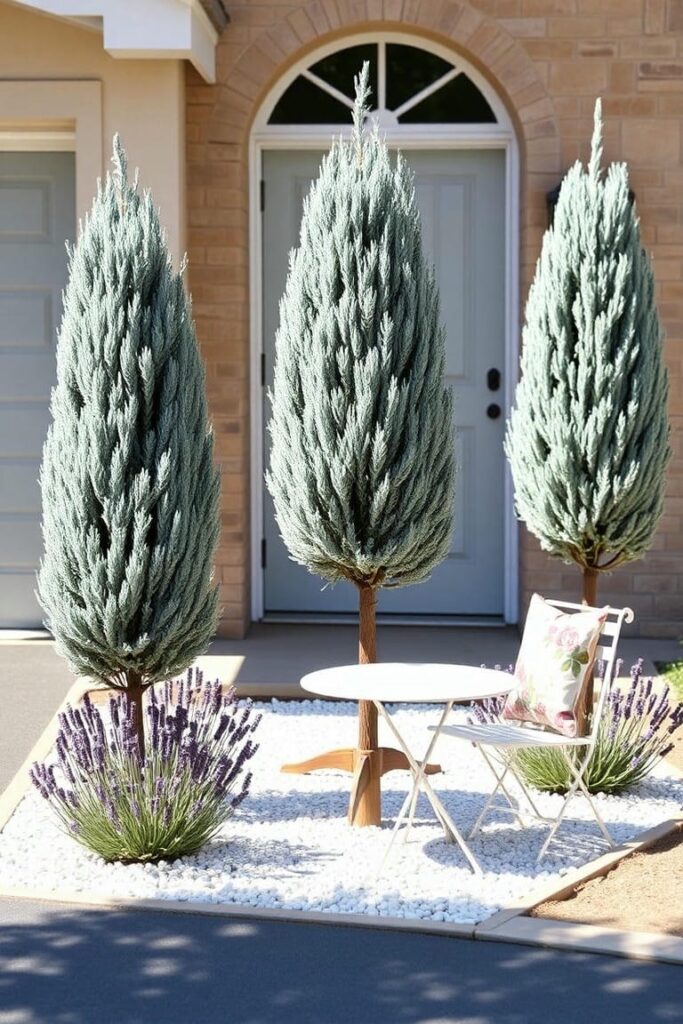
Taylor Juniper rises 3 to 5 feet each year and reaches 20 feet in height and 4 feet in width once fully established.
Its dense, blue-green, scale-like foliage stays full year-round, so it provides yearlong structure and privacy. Its upright form and vibrant texture make it a strong visual anchor in both formal and informal landscapes.
You can use Taylor Juniper along property lines, driveways, or even pathways to create a narrow, evergreen border that withstands harsh winters.
13. Parkland Pillar Birch
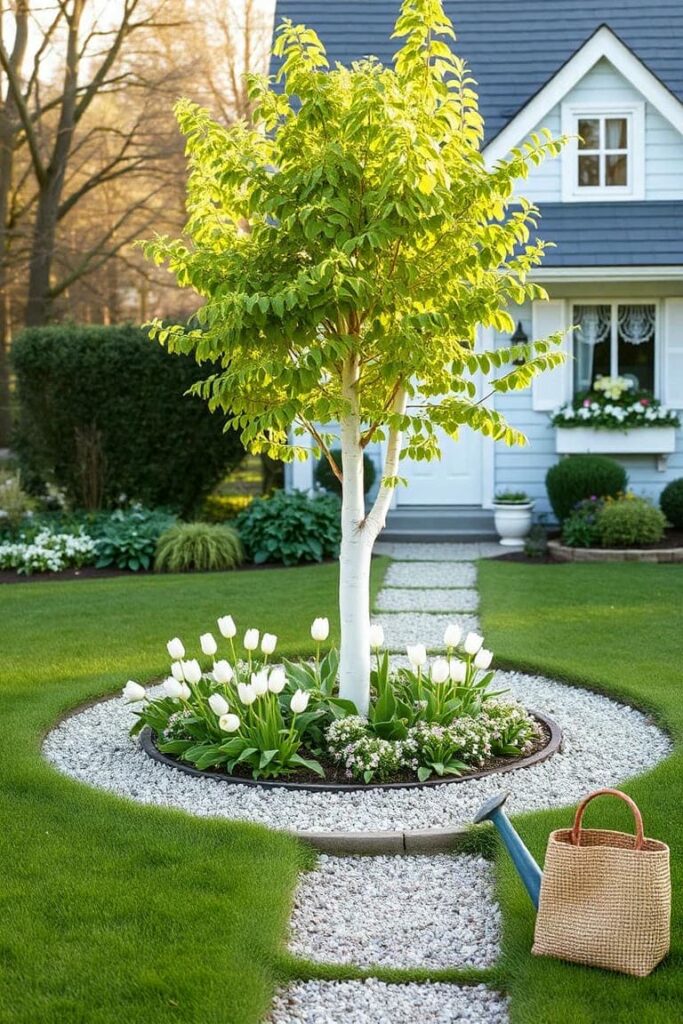
Parkland pillar birch’s dense structure forms a natural screen, while its green foliage brightens to golden-yellow in fall, making it a suitable option for injecting warmth, color, and style in any setting, especially along simple walkways.
The signature papery white bark peels back to reveal creamy tan layers, adding texture and visual interest year-round.
You can plant this tree to introduce elegance and brightness to narrow spaces or compact gardens without sacrificing vertical impact.
14. Slender Silhouette Sweetgum
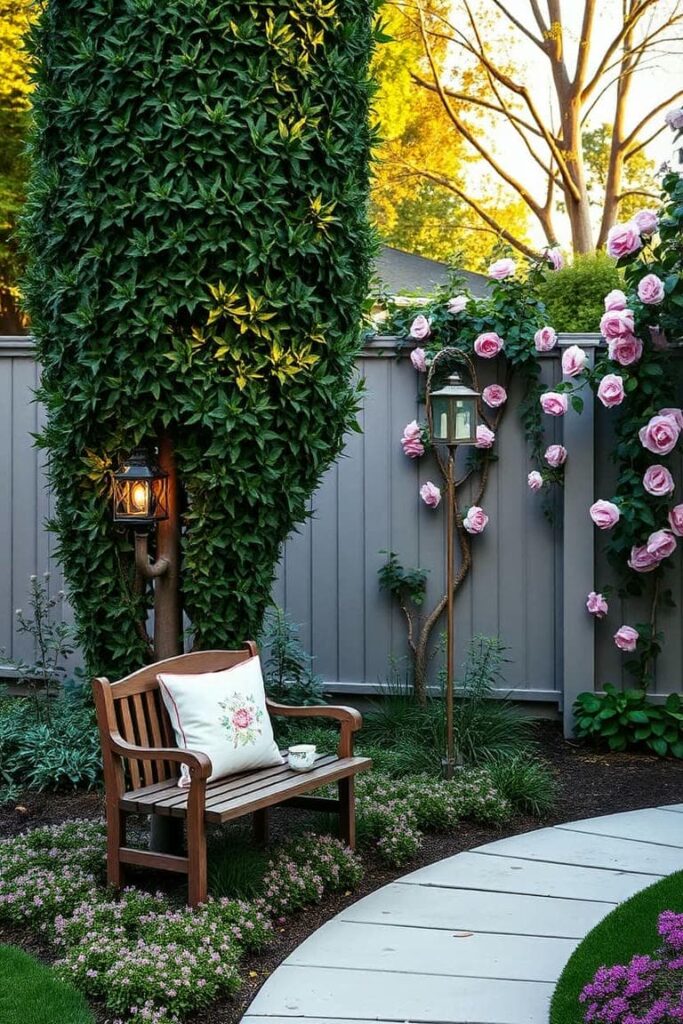
This striking foundation tree grows upright with a tight, symmetrical shape, reaching 50 feet tall while staying just 4 feet wide.
Its dense, star-shaped foliage creates a full appearance that shifts from green in spring and summer to vivid plum, crimson, copper, or gold in fall.
Small white flowers bloom subtly among the leaves in spring and later form spiky seedpods that often linger into winter. The pods eventually drop and clutter the ground, so place this tree where cleanup won’t become a constant task.