
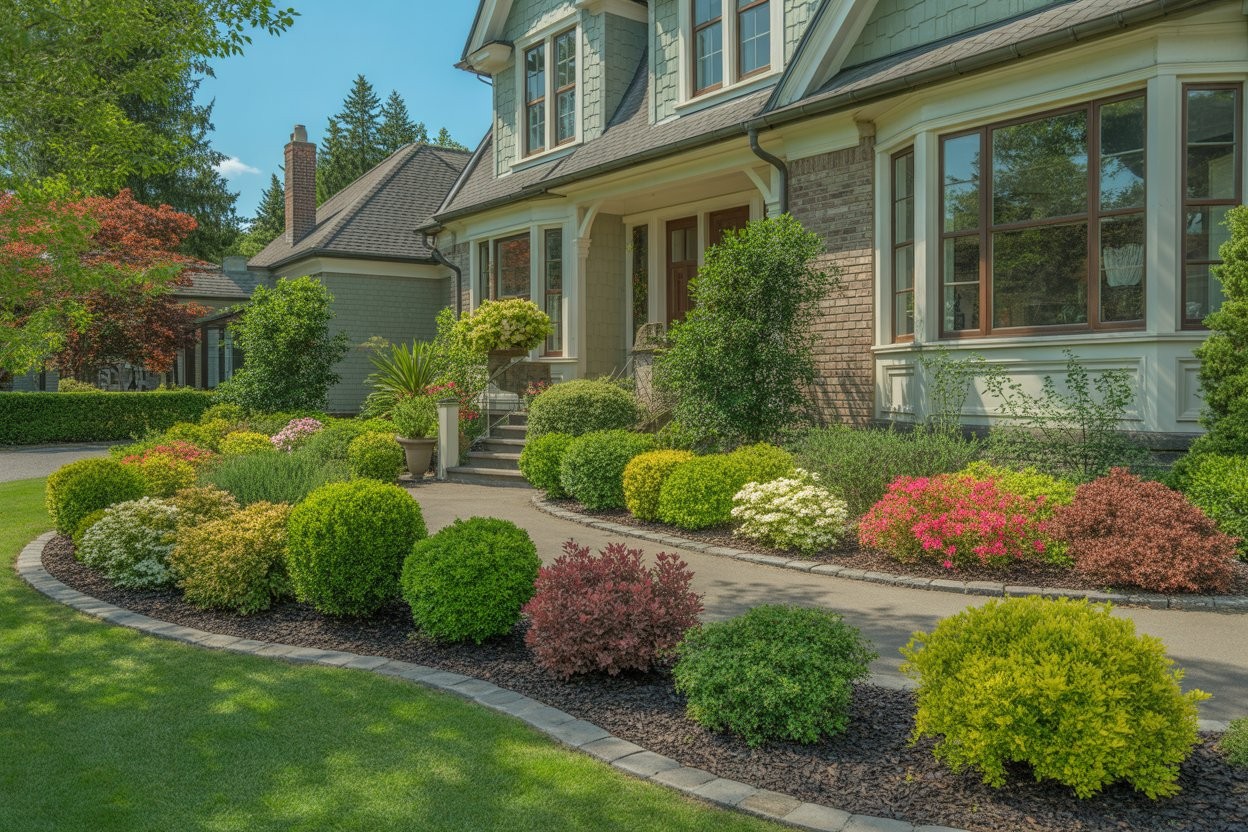
A neatly trimmed lawn might be your classic choice for front yard landscaping, but it often lacks character. So if you’re looking to add depth and visual interest to your home’s exterior, foundation plants offer an easy and lasting solution.
These plants do more than just decorate. They create a natural transition between your house and the surrounding landscape. Chosen thoughtfully, foundation plants can transform a plain space into a warm, inviting entryway.
Additionally, foundation plants soften the hard edges of your home, add texture to your yard, and bring seasonal color that shifts beautifully throughout the year. So instead of settling for just a sea of grass, you can design a more engaging view that draws the eye and welcomes guests with charm.
Whether you lean toward neat evergreens, colorful perennials, or low-maintenance bushes, here are foundation plants that work well to create a landscape that feels complete, balanced, and distinctly yours:
What Are Foundation Plants?
Foundation plantings are garden beds that sit along a house’s base to hide unsightly foundation elements.
Over time, their purpose grows beyond concealment and evolves into a central feature of home landscaping.
Foundation plants can beautify existing walkways, soften rigid architectural lines, and easily elevate curb appeal. And by combining shrubs, flowers, and bushes, foundation plants introduce color, texture, and structure that frame the front of house naturally.
24 Best Low Maintenance Front House Foundation Plants
Here are low-maintenance foundation plants that you can grow in front of your house to boost curb appeal:
1. Burning Bush
Grow burning bush to bring bold red fall foliage and elegant structure to your landscape. This slow-growing shrub reaches 15 to 20 feet tall and spreads 8 to 12 feet wide, and thrives in all soil types under full or partial sun.
2. Dense Spreading Yew
Add Dense Spreading Yew to your space for lush green foliage that offers privacy and year-round appeal. Its compact form and rich color create a classic, structured backdrop with lasting elegance.
3. Red Twig Dogwood
Grow red twig dogwood for fast growth and striking year-round interest. Enjoy white flowers, variegated leaves, fall color, white berries, and vivid red stems that brighten up your landscape.
4. Rhododendrons
You can plant rhododendrons in front of your home’s entrance to highlight vivid blooms in shades from soft pink to deep purple. This striking shrub offers year-round charm and a refined touch with its glossy evergreen foliage.
5. Roses
Choose from various disease-resistant roses that feature striking color combinations and rosette-patterned flowers. Use miniature, hybrid tea, or shrub roses to build a vibrant, eye-catching foundation in your garden.
6. Pansies
Grow pansies in front of taller foundation plants to add a burst of spring color with red, purple, yellow, multicolored, and white blooms.
7. Petunias
Grow petunias to cover wide garden spaces with vibrant, funnel-shaped blooms. This plant spreads up to 3 feet and rises 12 inches tall, delivering a colorful, eye-catching display.
8. Hydrangeas
Plant full sun hydrangeas to transform your front yard with bold, vibrant flower clusters in lavender, pink, white, or blue. Their umbrella-shaped corymbs bloom from spring to fall, creating a stunning seasonal display.
9. Marigolds
Grow marigolds for bold yellow or orange pompom blooms. Choose compact 4-inch varieties for edging or taller 2-foot types for added height and color in garden beds.
10. Snapdragons
Use snapdragons with their 8-inch flowering spikes and bold blooms in white, red, yellow, pink, and purple to create a striking mixed border in your garden.
11. Azaleas
Grow azaleas to add pastel-hued, frilly blooms to your landscape. This bushy perennial reaches 2 to 4 feet, drops its leathery leaves seasonally, and flourishes in temperate zones with minimal upkeep.
12. Boxwood
Grow boxwood along your home’s foundation to form tidy hedges, privacy screens, or barriers. With dense oval leaves and a height of 3 to 4 feet, this versatile shrub thrives in both full sun and complete shade.
13. Wintercreeper
Grow wintercreeper on your home’s sunny side for bold ground coverage and visual interest. This low-maintenance, spreading shrub reaches 2 to 3 feet tall and up to 5 feet wide, and it features green with creamy-white or golden-yellow foliage once established.
14. Coral Bells
Add coral bells to your foundation planting for year-round color and texture. This evergreen forms neat 2-foot clumps and offers striking foliage in shades of lime green, red, purple, green, and black.
15. Japanese Yew
Plant dwarf Japanese Yew along your foundation for a neat, sculpted look. You can trim thisfoundation plant into various shapes or choose columnar varieties for hedgerows and spreading types for broader coverage up to 15 feet wide.
16. Cherry Laurel
Grow cherry laurel as a striking evergreen shrub or small tree with white flowers and red fruits that mature to black. Keep it neat and attractive with simple trimming and pruning.
17. Juniper
Use juniper as a reliable anchor in front yard designs. This evergreen front yard shrub thrives in full sun, adapts well in many regions, and offers year-round interest with distinct berries and low maintenance across its many species.
18. Hostas
Grow hostas on your building’s north side for lush, low-maintenance ground cover. This clumping perennial reaches 2 feet tall with broad variegated or light-green leaves and thrives in sun or shade. Some varieties also produce pale purple or white blooms.
19. Phlox
You can plant phlox to brighten your foundation with vibrant purple, white, pink, and red blooms. This sun-loving perennial grows up to 5 feet tall, thrives in USDA zones 3 to 9, and works well for filling garden gaps with color.
20. Lilies
Plant lilies in your front yard for bold summer blooms and a rich fragrance that draws attention. Ideal for mass planting, these stunning flowers elevate your home’s curb appeal with vibrant color and charm.
21. Tall Ornamental Grasses
Use tall ornamental grasses to create a smooth, flowing texture along your home’s foundation. Choose from varieties like pampas grass, silver grass, fountain grass, Chinese silver grass, and reed grass for movement, contrast, privacy, and a unique visual appeal.
22. Smoke Bushes
Add smoke bushes to your landscape for a bold, colorful foundation display. This woody shrub features golden, purple, and green leaves on multi-stemmed branches, turning vibrant coral, red, pink, and purple in fall for stunning seasonal impact.
23. Rose of Sharon
Grow Rose of Sharon in your front yard to introduce vibrant blooms in purple, pink, red, and white. These beautiful roses add height, color, and charm to your landscape throughout the blooming season.
24. Ogon Spirea
Plant Ogon Spirea in front of your house for bold color and structure. This low-growing woody shrub features striking golden lanceolate leaves and reaches 3 to 5 feet wide and up to 5 feet tall.
How to Choose the Best Foundation Plants for Front of House
Below are tips to help you choose the best foundation plants for the front of your house:
1. Pick Plants That Match Your Home’s Style
Foundation plants must reflect your home’s architectural character. For example:
- Symmetrical, evergreen shrubs and manicured hedges are ideal for formal homes.
- Informal structures, such as beachside bungalows, work better with free-form plants like ornamental grasses, Hydrangeas, and shrub roses.
- Contemporary ranch homes benefit from bold silhouettes like Japanese Maples and cloud-pruned evergreens, which reinforce their modern flair.
The goal here is to ensure you match the planting style to the house’s design era and layout for visual harmony.
2. Factor in Light Exposure for Proper Placement
Sun and shade exposure dramatically affect plant performance. Therefore:
- Assess which parts of your home’s foundation receive direct sunlight or remain in shade.
- Opt for lush shade-lovers like Hostas and Ferns for low-light corners and choose plants that thrive in full sun without fading or wilting for sunnier spots
3. Account for Mature Plant Size Early On
Foundation plants need room to reach their full height and width. Choose species that won’t outgrow the space or crowd windows, porches, or pathways.
Always check the mature dimensions and plan spacing to avoid future pruning headaches or structural interference.
4. Coordinate Colors with Home’s Exterior
Color plays a crucial role in cohesion. You should:
- Complement or contrast your home’s exterior palette with thoughtful plant selections.
- Aim for restraint: two or three main colors can unify the design and offer a polished, curated appearance.
- Avoid chaotic clashes by sticking to a controlled, intentional scheme.
5. Ensure Year-Round Seasonal Interest
Build a dynamic landscape that transforms with the seasons. Use evergreens for consistent structure and color through winter.
Add spring bulbs and flowering shrubs for bursts of color in warmer months. In fall, rely on perennials and deciduous shrubs that display fiery foliage or late blossoms to complete the visual cycle.
6. Create Visual Layers with Varied Plant Heights
Introduce depth and interest through layered planting. Position taller evergreens or small ornamental trees at the back, place medium shrubs in the middle, and add low-growing groundcovers in front.
This tiered approach frames your home, draws the eye naturally, and breaks visual monotony.
7. Vary Plant Forms and Textures for Richness
Diversity in shape and texture keeps the foundation planting from appearing flat. So mix upright forms such as columns or pyramids with soft mounds and cascading grasses. Blend broad-leaf shrubs, fine ferns, and feathery blooms for tactile and visual contrast.
8. Frame and Maximize Exterior Views
Use plantings to enhance the views from your windows, not block them.
Frame sightlines with low or open-structured plants and position focal-point species where they draw the eye to beautiful outdoor scenes.
A well-considered planting plan improves both curb appeal and daily indoor enjoyment.