

The front of your home is the first thing people notice – whether they’re arriving for a visit or simply passing by.
Transforming that space with carefully arranged blooms sets the tone for your entire property and creates a lasting impression that feels both vibrant and inviting.
With the right plants and a layout tailored to your space, it’s easy to create a flower bed that’s beautiful, low-maintenance, and uniquely yours.
I’ve put together a collection of flower bed ideas for front of house to help you bring your vision to life with inspiration that suits a variety of styles, spaces, and skill levels.
1. Introduce a Hanging Flower Bed
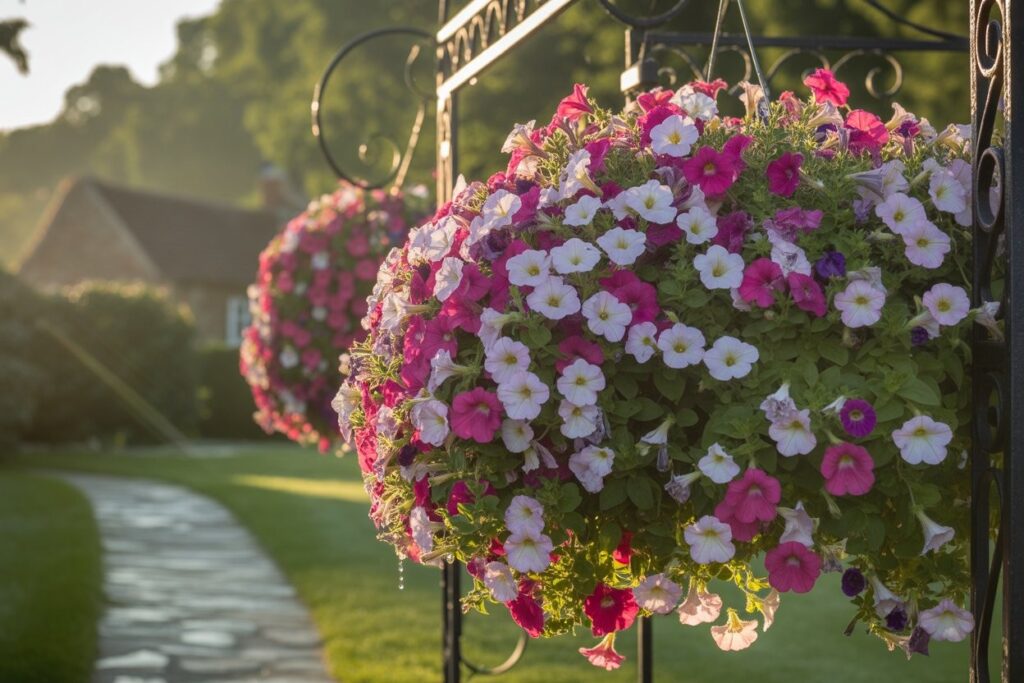
Hanging baskets and planters offer a quick, charming way to brighten your front porch, windows, fences, or even pergolas and tree branches.
- Fill the baskets with cascading blooms like petunias, bacopa, lobelia, or verbena to create lush, overflowing displays that draw the eye.
- Add depth and texture with trailing foliage plants such as ivy, ferns, or spider plants.
- Tuck in fragrant, useful herbs like rosemary, basil, and mint if space allows.
Vary the height and positioning of the baskets for a layered, dynamic effect that brings your space to life to elevate the visual impact.
2. Build a Flower Wall
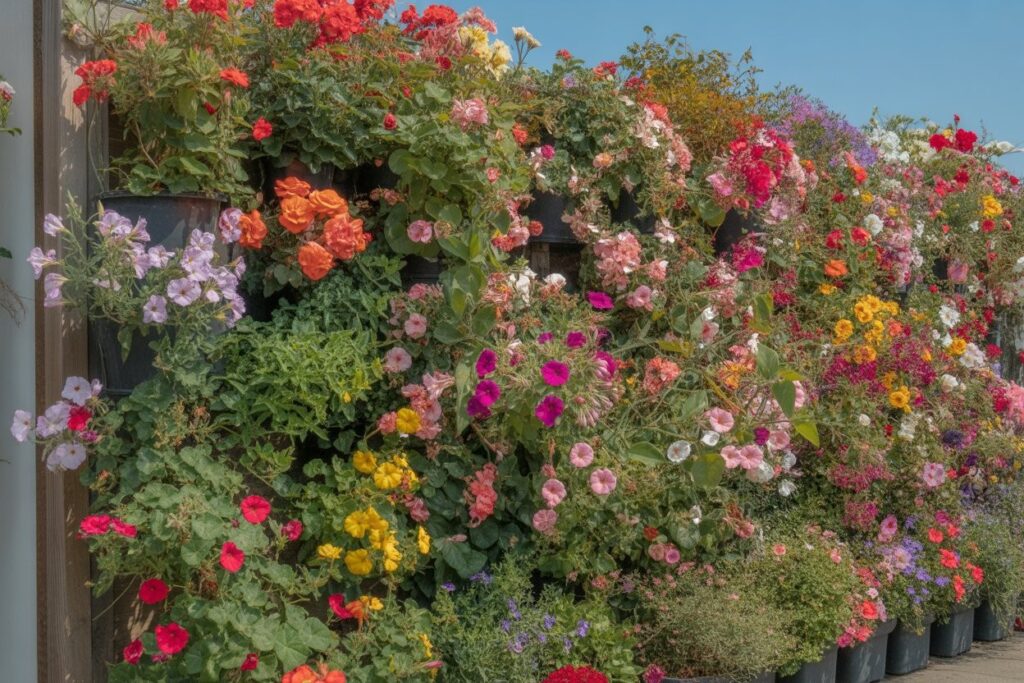
A flower wall is the perfect solution if you’re short on space but still want a vibrant floral display. This vertical garden concept brings color and greenery to compact areas without crowding your front yard, making it both practical and visually striking.
Mount flowers along fence lines, walls, beneath windows, or around features like pergolas and trellises. Ideal plants you can use include climbers and trailers such as wisteria, clematis, trailing fuchsia, nasturtium, and bougainvillea.
3. Construction a Raised Flower Bed with a Seating Area
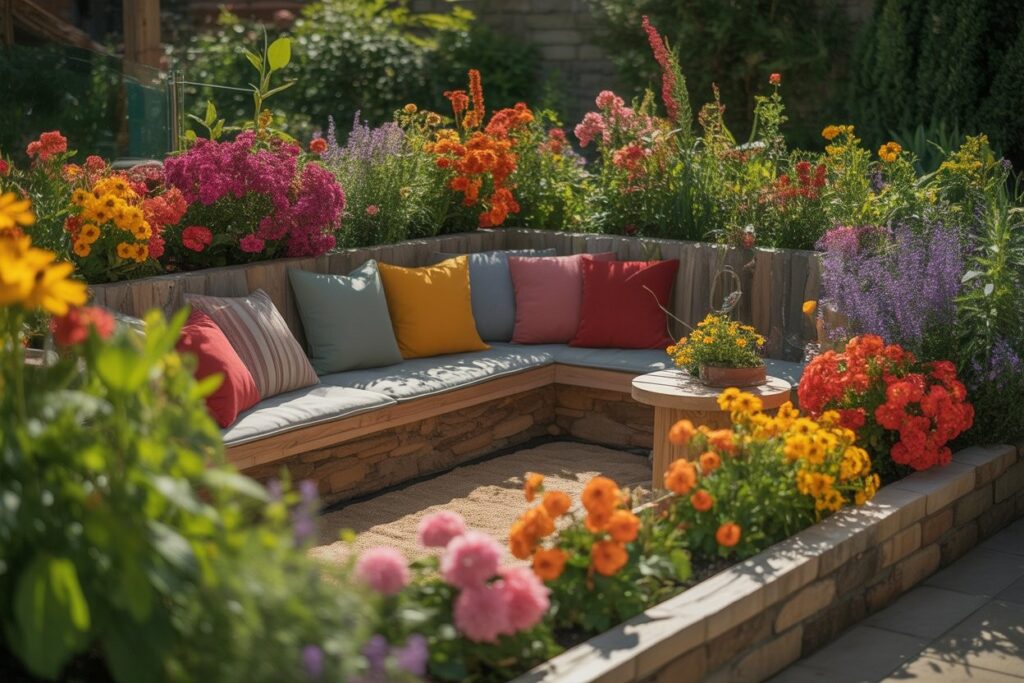
Transform your outdoor space into a charming retreat with a raised flower bed that doubles as a seating area. Use sturdy materials like wood, brick, or stone to build the bed’s frame, and ensure it’s tall enough to sit on while leaving enough room for vibrant plantings.
Fill the bed with a mix of colorful flowers, shrubs, and lush foliage to create a lush, inviting atmosphere. Incorporate built-in benches or place freestanding seating like chairs or a bench along the edge to make it a perfect spot to unwind and enjoy your garden up close.
4. Go for a Potted Flower Bed
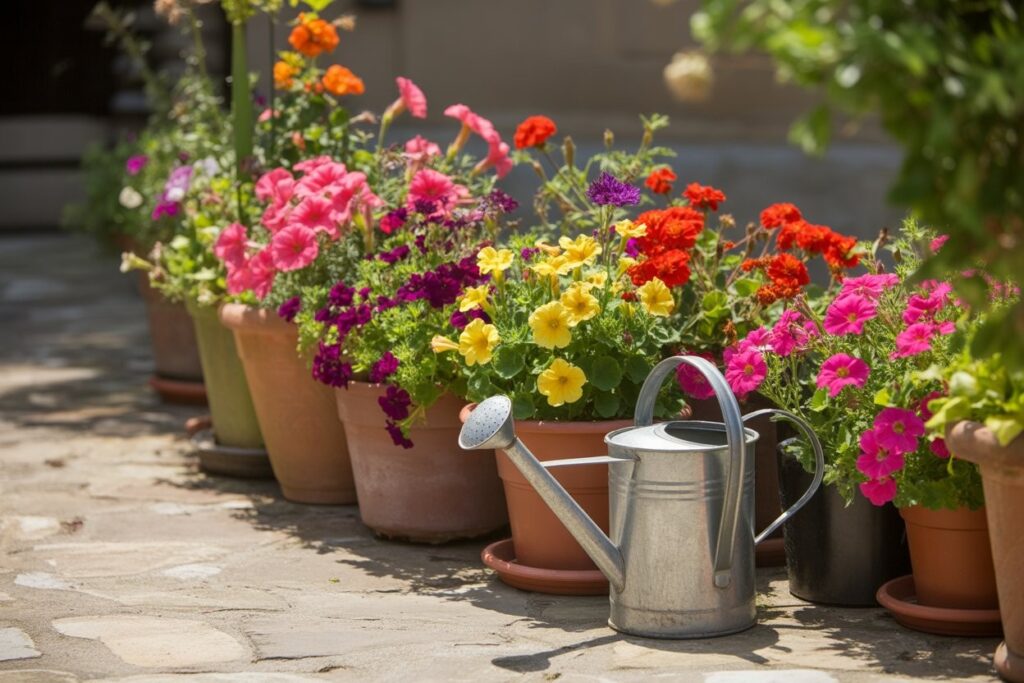
Pots and containers are a smart solution for adding floral beauty in small or flexible spaces. They let you experiment with plant pairings, adjust arrangements with the seasons, and position flowers wherever sunlight and water needs align.
Factor in each plant’s mature size and growth pattern when designing your potted flower bed setup. Place containers near patios, entryways, seating areas, or along pathways to create eye-catching focal points or subtle enhancements that elevate your overall landscape design.
5. Play with Colors
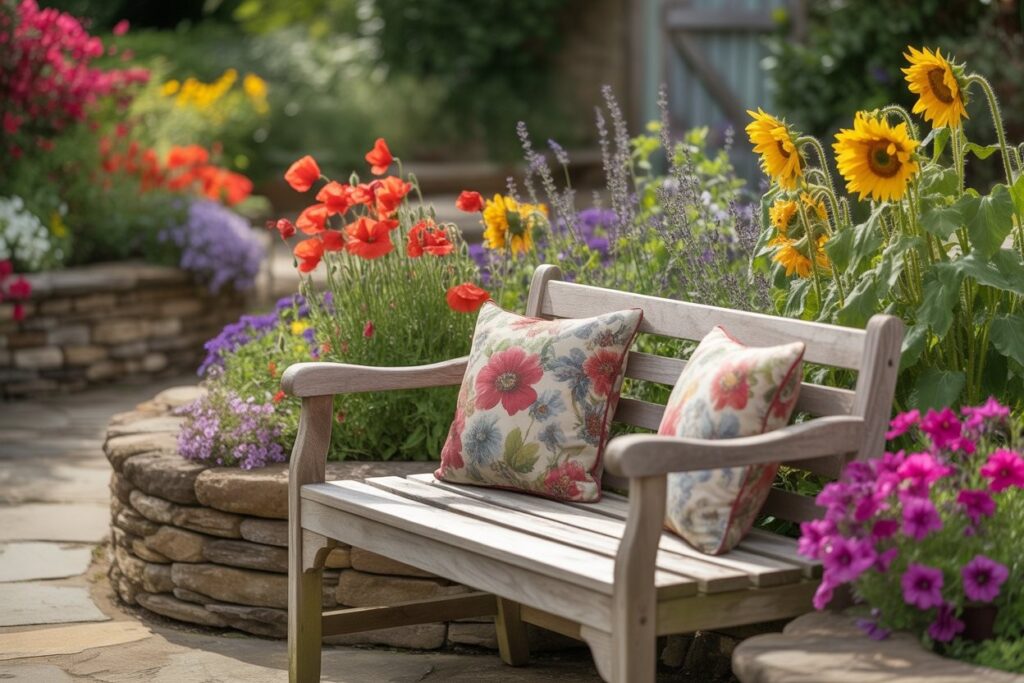
Flower beds offer a perfect canvas for creative color play. For a refined, cohesive look, go with a monochromatic palette. That means planting flowers in varying shades of one color, like soft pinks or deep purples, to create depth and harmony.
Experiment with complementary color pairings if you’re aiming for bolder impact. Try vibrant duos like purple and yellow for a cheerful pop, or orange and blue for a striking, high-contrast display.
6. Try a Log Flower Bed
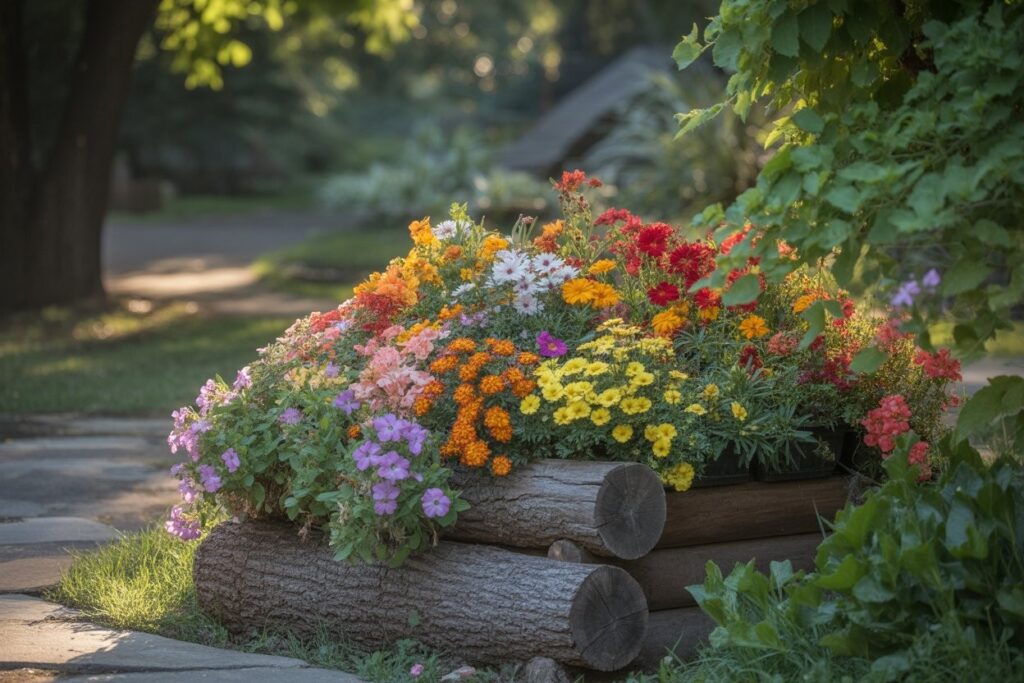
Choose solid, rot-free logs and cut them down to manageable lengths. Hollow out the center to create planting space, then smooth the surfaces with sandpaper and apply a wood sealant to extend the log’s lifespan. Once prepped, fill the cavity with quality potting soil and plant your chosen blooms.
These natural planters bring earthy charm and add originality to your landscape while putting discarded wood to creative use.
7. Get Creative with a Wheelbarrow Flower Bed
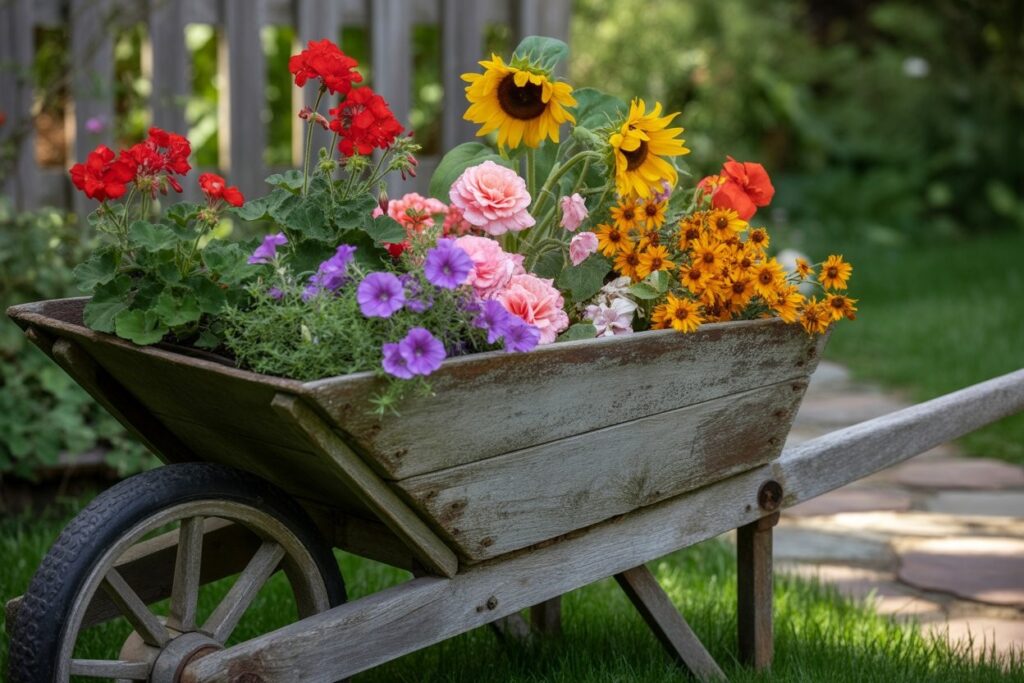
Make sure the wheelbarrow is sturdy and has a flat base to hold soil securely, then clean it thoroughly and seal any cracks. Drill drainage holes at the bottom to prevent waterlogging. Once prepped, fill the wheelbarrow with potting mix and arrange your favorite blooms for a colorful display.
Position your wheelbarrow flower bed where it will draw attention and enjoy the flexibility of moving it around to suit your space or the season.
8. Introduce a Walkway Flower Bed
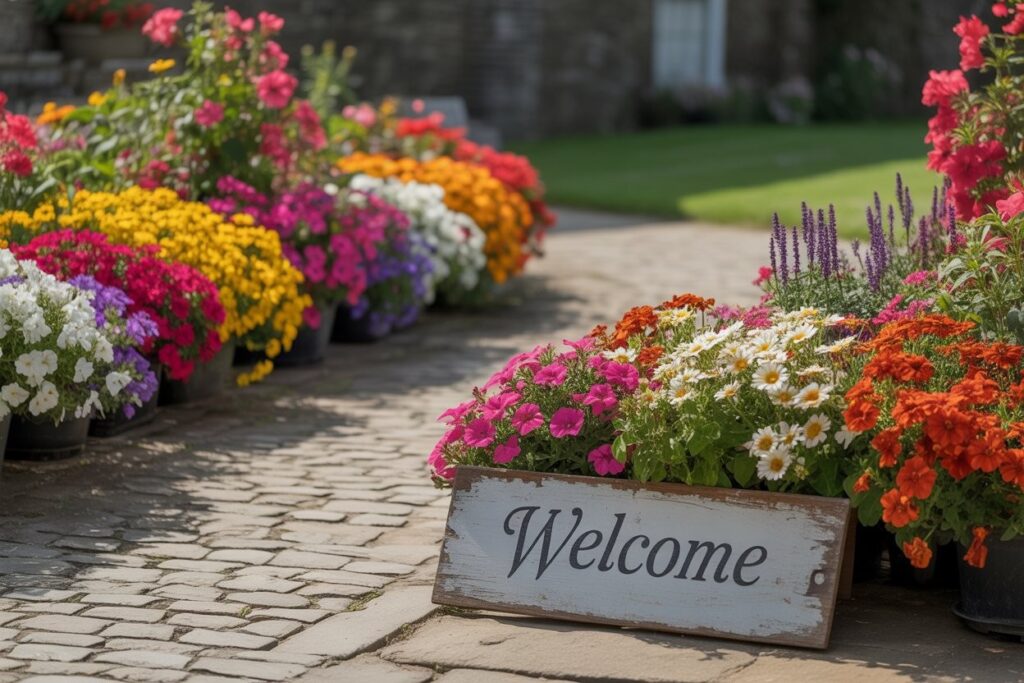
Start your landscape transformation by enhancing your walkway with a well-planned flower bed that complements rather than competes with the path.
Choose flowering plants with bold blooms or striking foliage. Include fragrant options like lavender, jasmine, or roses to elevate the sensory experience. Then edge the walkway flower bed with decorative stones, pavers, or other hardscape elements for structure and style.
9. Plant a Tree Base Flower Bed
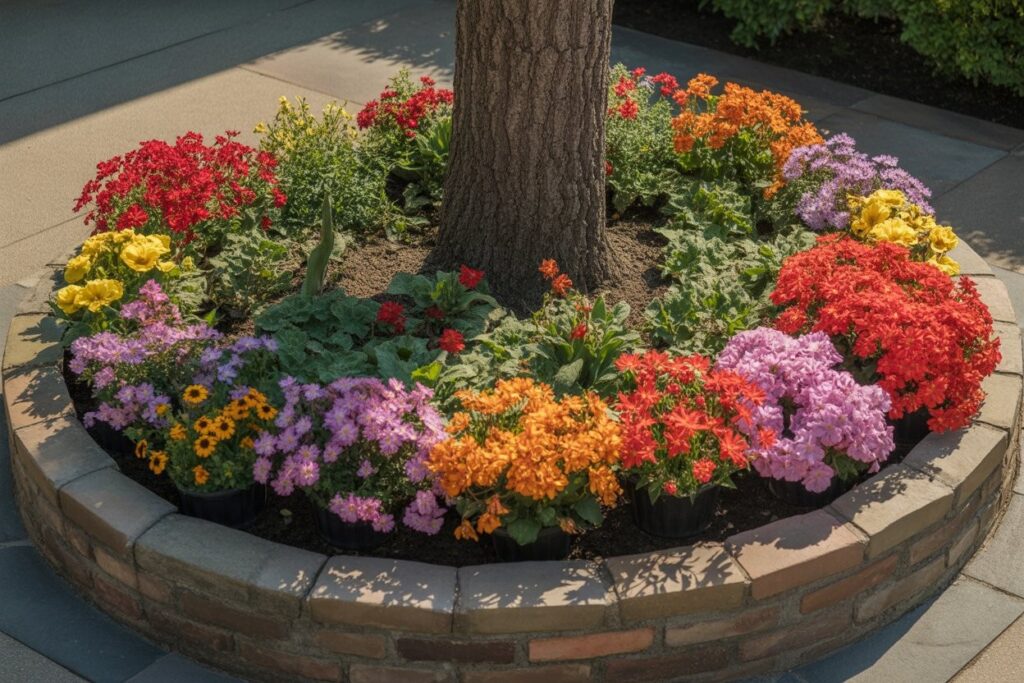
Add flower beds to bring life and color beneath the canopy if the space around your front-yard trees looks sparse. Use shade-tolerant plants that thrive under trees to create a vibrant, low-maintenance display that enhances the tree’s natural beauty year-round.
Design your layout based on the tree’s canopy and root space, with radial patterns being especially effective for maximizing planting area without disturbing the roots. This approach adds visual interest while preserving the health of your trees.
10. Grow a Circular Flower Bed
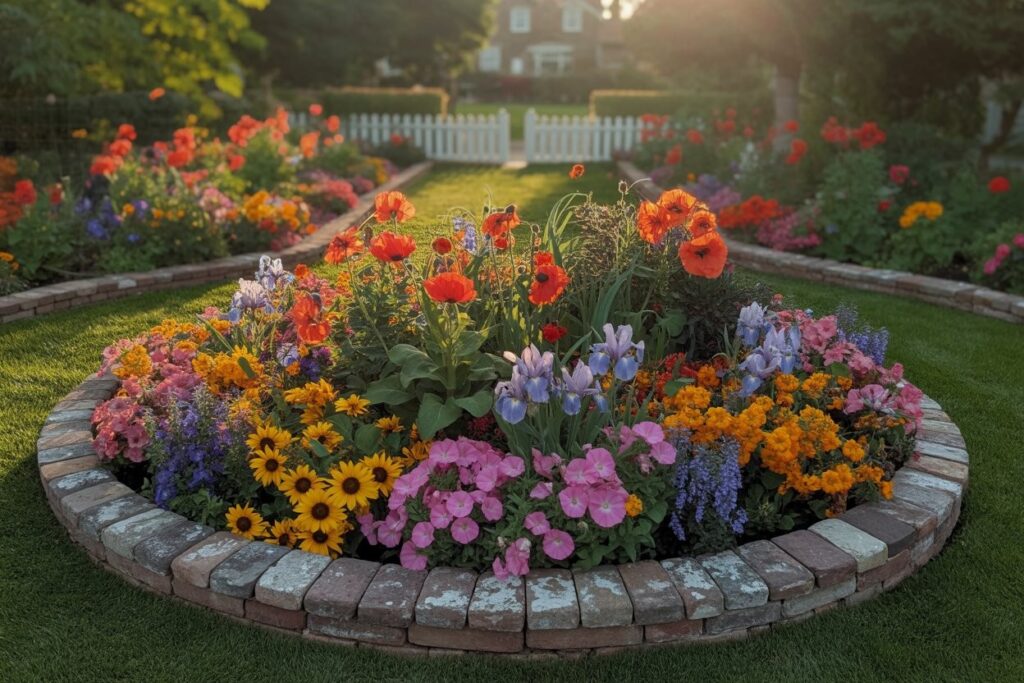
Add visual interest to your front lawn by introducing a circular flower bed to contrast with the typical rectangular layout. At its heart, place a striking focal point, such as a flowering tree, ornamental grass, fountain, or sculpture, to anchor the design.
Surround this centerpiece with either symmetrical plantings for a refined, formal effect or staggered groupings for a relaxed, natural vibe. Use medium-height flowering perennials as fillers, and define the edge with low-growing plants or durable materials like stone, timber, metal, or plastic to frame the bed beautifully.
11. Try a River Rock Flower Bed
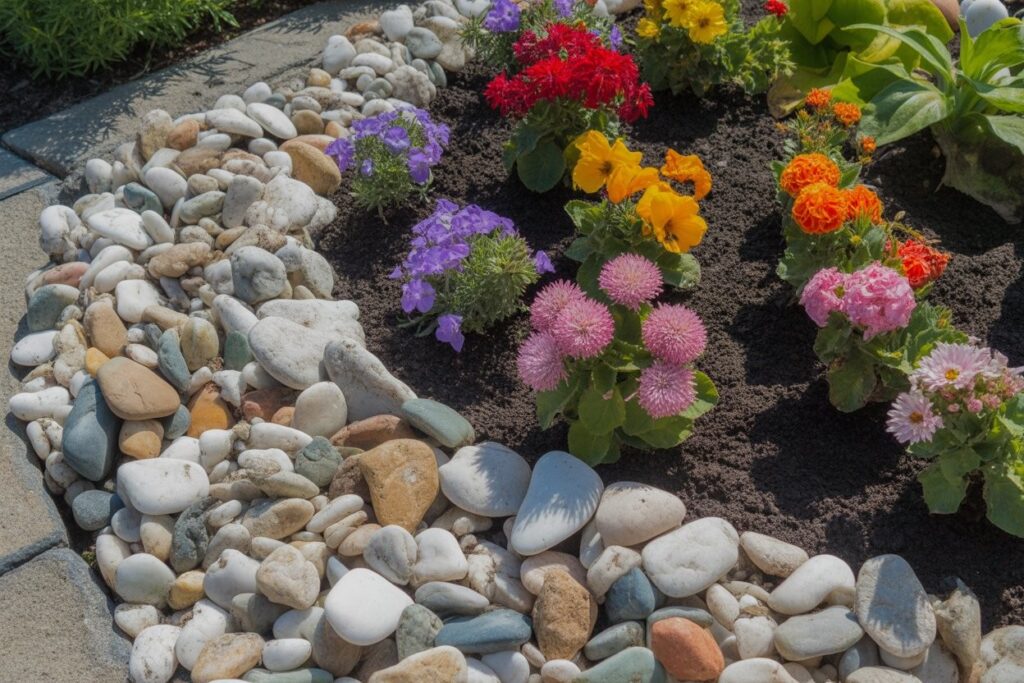
A river rock flower bed brings rustic charm and enduring beauty to your landscape with minimal upkeep. The contrast between rugged stones and soft, colorful blooms adds texture and visual intrigue.
To build a river rock flower bed, lay landscape fabric over the soil to suppress weeds, then spread the river rocks evenly on top. Cut planting holes into the fabric, dig into the soil below, and plant your flowers. Customize the look with your choice of rock color, shape, and size to match your aesthetic.
12. Repurpose Old Tires
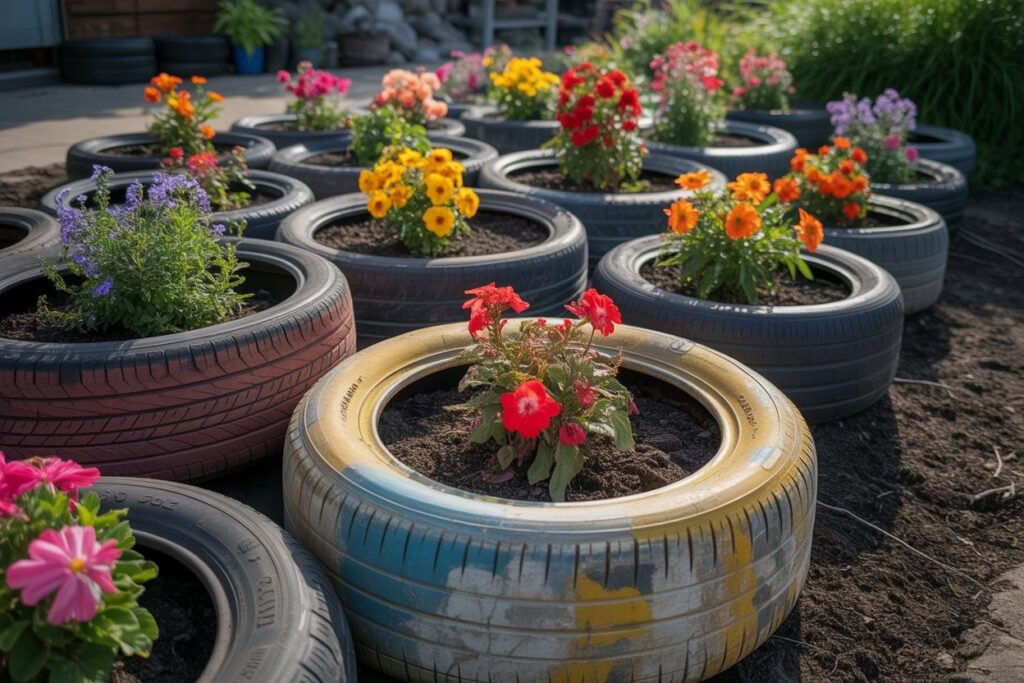
Stack, hang, or group old tires depending on your layout and space. Customize them with weather-resistant paint, fun patterns, or stencils to inject color and personality into your design.
If you intend to hang a tire, make sure you securely fasten it to a strong support like a tree using rope or chains. You can also cut the tires into unique shapes for added flair.
13. Start a Tiered Flower Bed
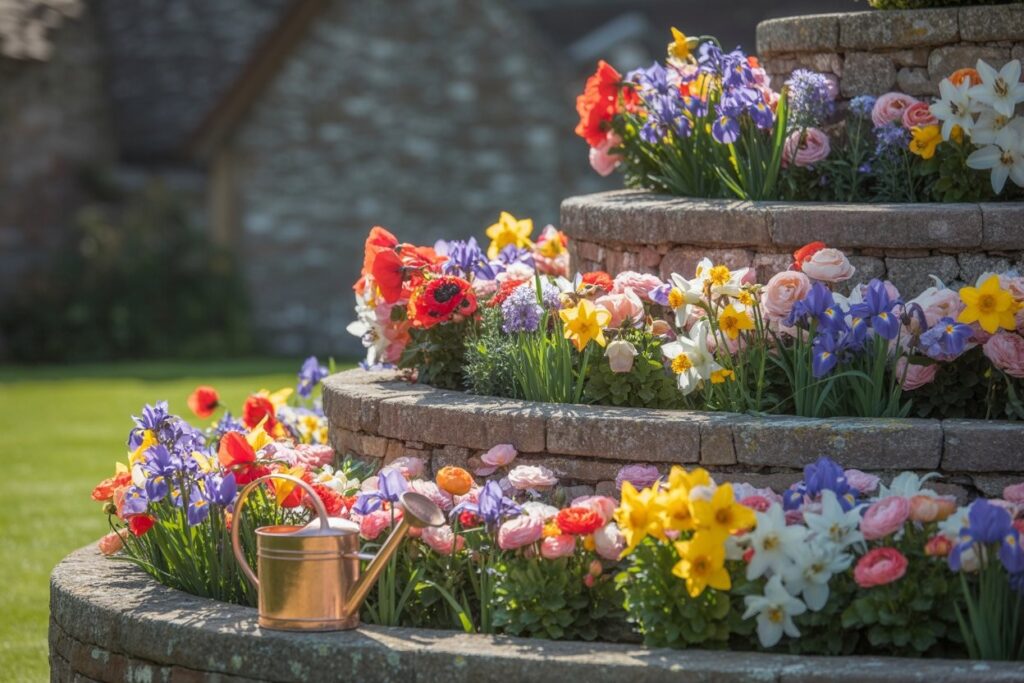
You build layers using materials like wood, stone, or metal. You can even customize the tiered flower bed in different shape, size, and height to suit your design vision.
Plant taller flowers, shrubs, or grasses in the back and shorter blooms or groundcovers at the front to create depth and a sense of flow. Personalize your tiers with decorative touches like garden ornaments, lighting, or paint finishes that reflect your style for added charm.
14. Create a Wavy Flower Bed
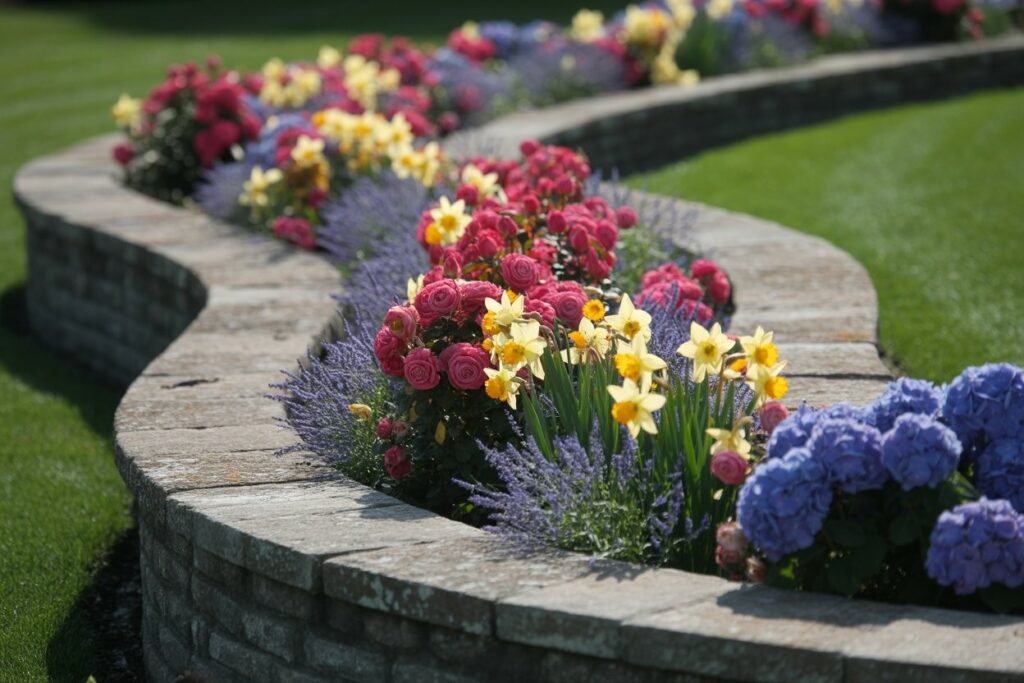
Add a natural, flowing charm to your front yard with a wavy flower bed that echoes the curves of rivers and hillsides. Its organic shape brings movement and softness to your landscape, making it perfect for a casual, relaxed aesthetic.
While undeniably eye-catching, this design does call for a bit more upkeep than straight-edged beds. So, be ready to dedicate some effort to trimming and maintaining its curves to keep it looking lush and intentional.
15. Do Seasonal Rotation
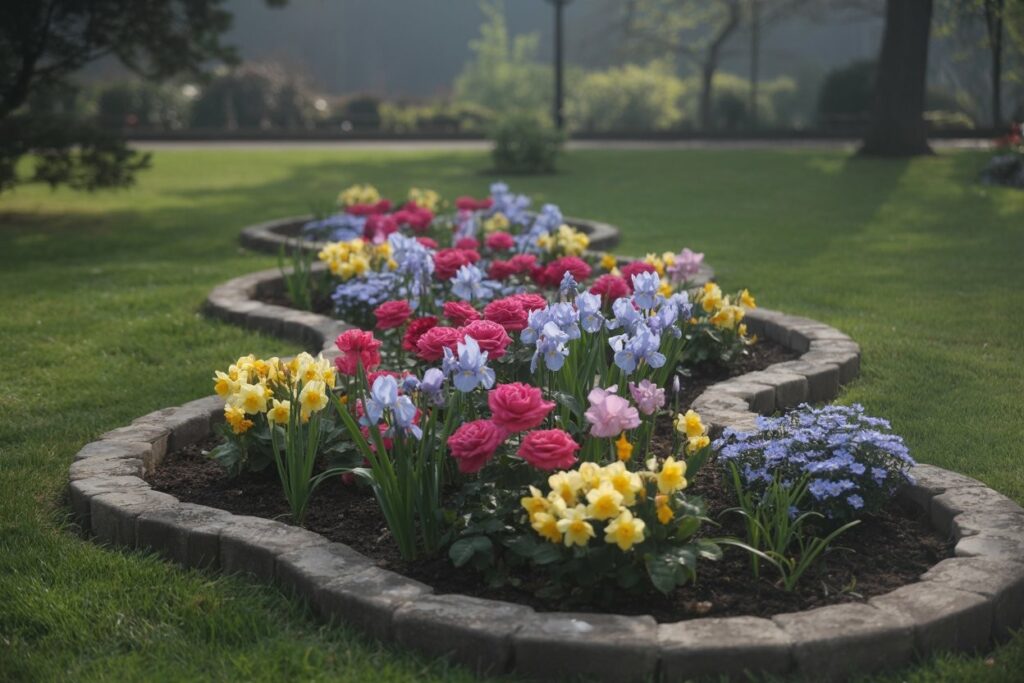
Keep your flower bed lively and colorful all year by planting a mix of seasonal bloomers and foliage.
Begin in spring with cheerful tulips, daffodils, pansies, and violas. As temperatures rise, swap in heat-loving summer stars like marigolds, coneflowers, and daylilies to sustain the floral display.
Bring in asters, sedums, and plants with striking fall foliage like ornamental kale or Japanese maples when autumn arrives. Even in winter, your flower bed can shine with hellebores and witch hazel.