
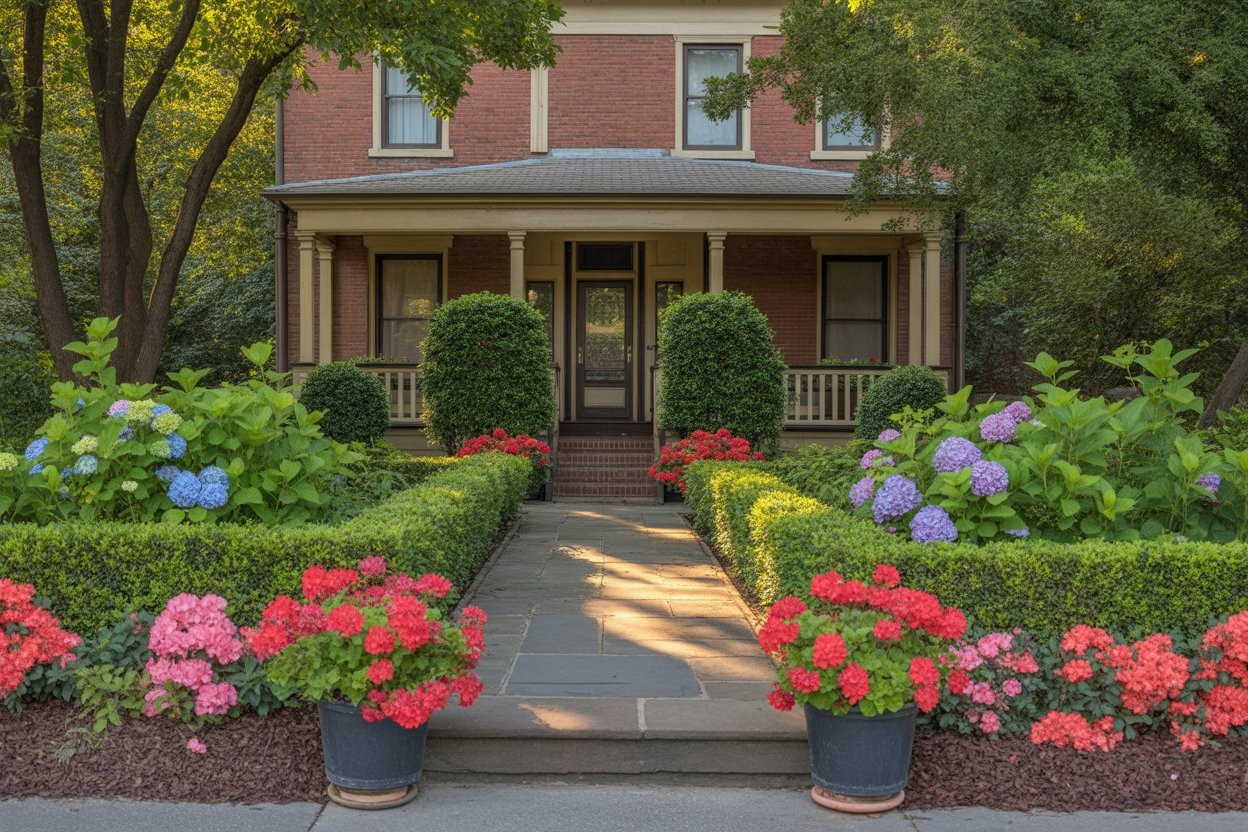
Using perennial plants to define borders is one of the simplest ways to bring structure and style to your landscape.
Perennial plants do more than fill space. They create a clean, natural edge that ties everything together. Moreover, perennial plants mark out paths, frame flower beds, and soften transitions between grass, gravel, or hardscaping.
Once established, perennial plants require less upkeep while still offering steady color, texture, and form. This makes them an ideal choice for borders where consistency with minimal effort matters.
Whether you prefer bold blooms, delicate foliage, or a mix of both, here are perennials that can fit the role without overwhelming the rest of your garden:
1. Hubricht’s Bluestar
Hubricht’s Bluestar offers a surprising twist for borders, with soft blue spring flowers and fine-textured foliage that highlights neighboring plants. Its golden fall color adds a bold seasonal shift that draws the eye.
Group plantings in large borders deliver a sweeping display from spring through fall. Paired with perennials or ornamental grasses, it brings contrast, movement, and year-round visual depth.
2. Hostas
Hostas thrive in shade and bring depth to borders with their large, often variegated leaves. Ideal for shaded paths, they succeed where other plants fail and provide reliable texture in low-light spots.
Their wide range of sizes and colors allows for bold groupings or understated ground cover. Smaller varieties line borders with clean, tidy growth, adding polish to the layout. Though low-maintenance, they need protection from slugs and snails to stay pristine.
3. Catmint
Catmint, a hardy perennial with aromatic gray-green leaves, produces small tubular flowers in blue, lavender, pink, or white. It blooms for weeks and often reblooms when cut back after its first flush.
This perennial creates a soft, flowing outline and blends well among other plants for lasting interest. The ‘Six Hills Giant’ variety adds height and structure, while ‘Blue Wonder’ fits neatly at the front, offering contrast without overwhelming the space.
4. Creeping Thyme
Creeping thyme, a low-growing perennial with a mat-forming habit, can fill border gaps and edges paths with dense, colorful growth. Its small flowers in shades of purple, lavender, or pink bring subtle charm to tight spaces.
For bold color, use ‘Red Creeping Thyme’ along borders, or choose ‘Pink Chintz’ for its soft pink blooms and fuzzy foliage. ‘Magic Carpet,’ with its compact form, also offers a clean, vibrant edge that keeps borders neat and textured.
5. Coreopsis
Coreopsis brightens borders with daisy-like blooms in yellow, pink, red, orange, and bi-colored tones, flowering from late spring into fall.
Reaching 1 to 4 feet tall and spreading 1 to 2 feet wide, coreopsis fits well in the front or middle of borders. Its bold colors and long bloom period add consistent beauty to gardens without overwhelming the space.
For greater impact, plant coreopsis in drifts or clusters along edges, paths, or among mixed perennials to create rhythm and warmth.
6. Lavender
Lavender grows 1 to 3 feet tall with a matching spread, forming a rounded, bushy shape that suits borders along beds and walkways. Its uniform size and texture define garden edges with clarity and cohesion.
Lavender delivers a formal, structured look if planted in rows. And it maintains order while adding contrast and depth as a low edge, as well as if mixed with other plants.
7. Coral Bells
Coral bells, which grows 8 to 10 inches tall with flower spikes that reach up to 2 feet, bring vivid color and texture to borders with their bold foliage in shades of burgundy, lime green, caramel, and silver without overwhelming neighboring plants.
Ideal for shaded or partially shaded spots, coral bells enhance low-light areas with rich leaf tones, and the compact varieties can soften edges, line paths, and add depth and contrast while keeping borders refined and balanced.
8. Black-Eyed Susan
Black-Eyed Susan can brighten corner garden borders with golden-yellow petals and dark central cones. Their daisy-like blooms pair easily with other perennials and annuals to enhance mixed borders with color and contrast.
The Goldsturm variety stands out for its neat form and dependable flowering. For healthy regrowth, cut back plants in late fall or early spring, setting the stage for another vibrant display.
9. Yarrow
Yarrow adds vibrant color, texture, and resilience to garden borders with its fern-like foliage and dense, flat-topped flower clusters. Its long bloom time and range of sizes, from compact to tall, make it easy to build a balanced, layered design.
Choose dwarf varieties for the front and taller ones for the back, deadhead spent blooms to extend flowering, and divide clumps periodically to keep plantings vigorous.
10. Veronica
Veronica adds reliable color to borders year after year, with multiple varieties and an extended bloom season. Its tidy form and appealing foliage suit both front and mid-border placements for structure and ease.
Beeline Petite Pink Veronica fills space with vibrant energy. Used thoughtfully, this perennial for full sun creates depth and variety without overwhelming the border’s rhythm.
11. Peonies
Peonies bring lasting structure and beauty to borders with their large, vibrant blooms and lush green foliage.
Their leaves shift to red and gold in fall, adding a final burst of color before dormancy. And their mix of flower forms and seasonal changes ensures borders remain dynamic throughout the growing season.
Use herbaceous peonies in informal cottage-style borders or pair them with evergreens such as boxwood for a formal layout.
12. Salvia
Salvia offers lasting color and structure to borders with its long bloom time and neat growth. Its ability to draw in pollinators such as hummingbirds adds life to the garden while maintaining visual order.
Use taller varieties at the back and shorter ones in front to build layers. Pair them with low-growing plants to fill spaces, or mix them with perennials in complementary or contrasting colors for added interest. Plant in sunny, well-drained spots and keep young salvias watered until they take hold.
13. Sedum
Sedum brings lasting color to borders with its thick, fleshy leaves and star-shaped flowers in shades of white, yellow, pink, and red. Its foliage shifts with the seasons, adding interest well into fall.
Use upright varieties as focal points in mixed borders, pairing them with plants that offer contrasting forms and textures. For lower spaces or pathway edges, plant low-growing types to fill gaps and maintain a cohesive, vibrant look.
14. Japanese Anemones
Japanese anemones add soft elegance and late-season color to borders with their pink or white saucer-shaped flowers on tall, slender stems. Their tolerance for partial shade makes them valuable for brightening dimmer garden areas.
Plant them 18 to 24 inches apart and place them in the middle or back of the border, where their 2 to 4-foot height offers balance and movement. Try varieties such as ‘Honorine Jobert,’ ‘September Charm,’ or ‘Robustissima’ for reliable performance and visual appeal.
15. Astilbes
Astilbes thrive in shade and moisture, making them ideal for borders near water features or woodland edges. Their feathery plumes and fern-like foliage add soft texture and movement to garden spaces.
Reaching 1 to 3 feet in height, they work well in the mid-border, bridging gaps between tall and low-growing plants. Their finely cut foliage keeps borders visually rich throughout the season.