
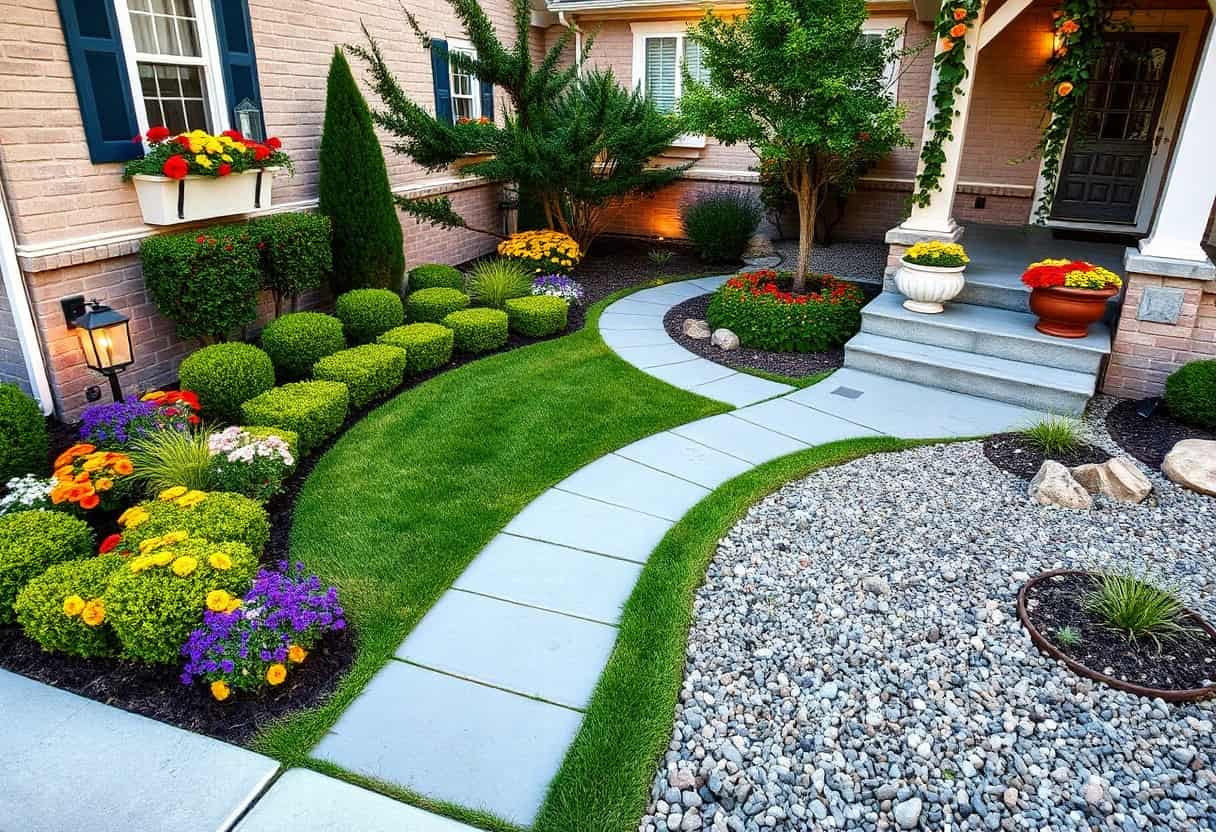
Do you have a small front yard that feels tiny and somewhat awkward? You need simple landscaping ideas to turn it into a welcoming space that shows off your taste and personality.
The key lies in simple, practical ideas that boost curb appeal without overwhelming the already tiny space – or your schedule.
To get started, here are small front yard landscaping ideas you can easily pull off without spending a lot of money.
1. Evergreen Plants
Choose evergreen plants like holly, juniper or boxwood and grow them to create privacy, fill small spaces, or define areas within your yard.
Evergreen plants help with low-maintenance coverage. And their durability ensures your yard looks lively even in winter.
2. Herb Garden
Create a small vegetable garden or a sizeable herb garden near your front door, behind your kitchen, or in your side yard depending on how much space you have.
Grow compact herbs like basil, parsley, or mint, and small vegetables such as cherry tomatoes or peppers in these garden beds. Add flowers to keep the garden colorful and engaging throughout the season.
3. Simple Fence
There are simple fence ideas that let you enhance your yard’s charm and privacy, not just to enclose it.
For example, a wrought iron fence lets light and air through while creating elegance and wooden fences add warmth and style flexibility.
4. Stone Pathway
You can install a stone pathway to guide visitors and protect plants from foot traffic. Stone paths easily fit small spaces without overwhelming the area.
For this small front yard idea, mix stone shapes and texture to add visual interest and to complement your compound’s style.
5. Reduce Weeds with Mulch or Gravel
Use landscape mulch or gravel around plants to control weeds and keep your yard neat.The mulch retains moisture, while the gravel creates a clean, fire-safe surface.
Both mulch and gravel require minimal upkeep and they easily make your yard feel spacious and organized.
6. Fragrant Flowers
Place jasmine, gardenia, or lavender in pots or small beds to maximize scent without taking much space.
Ensure these flowers receive adequate sun and water to stay healthy. As they thrive, these fragrant flowers will produce more blooms and stronger fragrance for your space.
7. Garden Lights
Install solar-powered garden lights to illuminate paths and borders without wiring or high electricity bills.
Solar-powered lights charge during the day and glow at night, adding safety, warmth, and visibility to your small front yard.
8. Potted Plants
Place tall pots with bold plants at the back, have medium pots with bushy flowers in the middle, and bring small pots with trailing vines or delicate blooms in front.
Mixing heights and textures to creates a visual interest without crowding the space. And with a well thought-out arrangement, the potted plants guide the eye and make your space feel dynamic.
9. Symmetrical Plant Arrangement for Visual Balance
Symmetrically plant arrangement lets you create a balance in your small front yard.
Place the same shrubs or flowers on either side of a walkway or door to make the space feel calm and inviting. Even small details like matching pots or two identical trees by the entrance achieve this effect.
Keep the symmetry sharp with regular trimming to maintain a neat, stylish appearance.
10. Native Plants that Lure Pollinators
Native plants let you create a low-maintenance, resilient garden that attracts local pollinators such as bees, butterflies, and birds.
Choose flowers and shrubs adapted to your area to reduce watering and avoid pesticides. Combine different types to create a dynamic, sustainable space that benefits you and the environment.
Then, grow these native plants where you can watch bird activities to enjoy both beauty and wildlife interaction.
11. Xeriscape Your Yard
Use water-saving landscaping to reduce maintenance and cut costs. Xeriscaping works well in hot, dry climates by featuring plants that need little water to thrive.
For this option, incorporate rock gardens with succulents or native plants suited to your local climate. These choices minimize watering, weeding, and fertilizing while keeping your small front yard healthy.
Apply xeriscape principles even in areas that aren’t hot year-round. Focus on drought-tolerant species to create an attractive, low-maintenance landscape that conserves water and fits your environment.
12. Water Fountain or Birdbath
Install a birdbath or small fountain in a central spot to draw attention to your small front yard without crowding the space. Add in some decorative stones or concrete to keep the area clean and elegant.
A fountain adds soothing sound, and a birdbath invites wildlife, thus enhancing your outdoor experience.
13. Drought Tolerant Succulents
Succulents thrive in sunny, well-drained spots and stay healthy and vibrant without frequent watering.
Mix succulents of different shapes and colors for a visually engaging landscape. You can even include flowering succulents to introduce bright accents.
Arrange the succulents in clusters or patterns to draw attention and add depth. Then place them strategically along pathways or borders to create points of interest without increasing upkeep.
14. Seating Area
You can add a small seating area to your small front yard with a bench or a couple of chairs.
Choose pieces that fit without crowding the space, like benches with storage or lightweight, movable chairs. Include a small table for drinks or a book to create a cozy, functional retreat even in limited space.
15. Pea Gravel Patio
Combine green grass with pea gravel to create a functional, drought-resistant space in your home’s patio. Position these materials strategically to balance aesthetics and usability.
Pea gravel helps to reduce water needs while keeping the area practical and the grass patches complement plants and trees, adding softness and contrast to hard surfaces.
This approach maintains greenery while conserving water and minimizing maintenance.
16. Rock Garden
Use large rocks with smaller pebbles and hardy plants to create a low-maintenance rock garden full of texture and visual interest.
Add succulents or resilient herbs between the rocks to fill gaps without demanding much care. Leave some spaces remain between stones to give the plants room and make the arrangement appear natural.
17. Shrubs
Use low-growing shrubs in your front yard to add color and texture without crowding windows or space. The shrubs create a tidy, open look that’s easy to maintain.
You can mix shapes and colors for interest, but keep the arrangement as simple as possible. This approach keeps the yard fresh, welcoming, and spacious.
18. Ornamental Grasses for Texture and Movement
Ornamental grasses grown in a sunny spots can fill small spaces and create a soft, natural atmosphere that adds texture, movement, and visual interest to your yard.
Position grasses strategically to complement other plants and enhance the overall design of your yard. Trim them once a year and water minimally to keep them healthy.
19. Plant Odd Numbers
Position groups, like a trio of small trees or odd numbers of bushes, to create a visual balance, complement existing features, and guide the eye naturally.Adjust spacing to maintain openness and allow growth.
This plant placement counterbalances hardscape elements, such as patios or walkways, and enhances symmetry without rigid patterns.
20. Raised Beds
Raised beds transform small yards by adding height and dimension. Build them with wood, stones, or metal to create multiple layers and increase planting space without overcrowding.
Arrange the beds in curves or geometric patterns to make your yard visually interesting. Or use an elevated design to simplify planting and weeding.
21. Edge Your Garden
Add stone edging around plant beds to create an organic, defined look. Let the stones follow natural curves or shapes and blend with the yard while containing plants.